


Your Pipeline Says "Open." Waiting on What, Exactly?
You know the feeling. You open your sales pipeline on a Monday morning, see a long column of open opportunities, and feel two things at once. "Look at all that potential." And, a second later, "I have no idea what is happening with most of these."
Picture a solar and battery installer with a team of six. Their pipeline has four stages: New, Quoted, Follow-up and Won. On a Monday in November, there are 47 opportunities sitting in Quoted and Follow-up.
The owner picks five at random and asks the team what is going on.
The first one is waiting for the customer's electricity bills so the system can be sized properly. The second is waiting on a finance approval from the customer's bank. The third has been compared against two other quotes and the customer asked a question about the inverter warranty, which nobody answered. The fourth asked to be called back after their holiday, which ended a week and a half ago. And the fifth? Nobody is quite sure. "I think he went with someone else?"
Five opportunities, five completely different situations. And the pipeline describes all of them with one word: Follow-up.
Here is the thing. A stage name that does not tell you what to do next is not really a stage. It is a parking spot.
Why do vague pipeline stages hide stalled deals?
Because "open" tells you that a deal exists, not what it needs.
Vague labels hide very different situations. "Pending" might mean waiting on the customer, waiting on you, waiting on a third party or waiting on nothing at all. Each needs a different action, but the label treats them the same.
The reason lives in someone's head. The salesperson remembers that customer three is waiting on finance. Until they are sick, on leave or simply flat out, and then nobody knows.
Nothing schedules the next step. If the stage does not trigger an action, the action depends on someone noticing. And busy people notice the loudest thing, not the most valuable one.
Stalled looks the same as active. An opportunity that is quietly progressing and one that has been forgotten for three weeks sit side by side, looking identical. You only find out which was which when the customer tells you.
And this is why so many pipelines look healthy right up until the end of the month, when a surprising number of "open" deals turn out to have closed somewhere else weeks ago.
How do you build pipeline stages that show the next action?
The aim is simple: anyone on the team should be able to look at an opportunity and know, in five seconds, what it is waiting for, who is doing what, and by when. Six steps.
1. Count what is hiding in your vague stages. Open your pipeline and look at every stage called something like Open, Pending, Follow-up or In Progress. For ten of those opportunities, write down what is actually happening. You will see the same handful of situations come up again and again.
2. Rename stages to describe the prospect's position. Turn those situations into stages. For the solar installer, that might be: Site details requested, Quote being prepared, Quote sent and being reviewed, Waiting on finance approval, Comparing options, Reconnect on agreed date. Each one describes where the customer is, not just that they exist.
3. Give every stage a next action and an owner. For each stage, decide what should happen next and who does it. "Quote sent and being reviewed" might mean a call from the estimator within three business days. "Waiting on finance approval" might mean a check-in once a week. Write it down, because these become your rules.
4. Record the reason and the date. When an opportunity moves into a waiting stage, capture why and until when: "Waiting on bank approval, expected around the 20th", "Back from holiday on the 3rd, call then". A short reason field and a follow-up date turn a vague pause into a plan.
5. Let the stage trigger the work. This is where the system earns its keep. When an opportunity moves into a stage, automatically create the task for the owner with the due date, send the customer anything useful for that moment (a request for their bills, a short explanation of how finance approval works) and remind the owner when the follow-up date arrives.
6. Define what stalled means, and flag it. For each stage, set a sensible time limit. If an opportunity sits longer than that with no activity, it gets flagged for the owner, and then for a manager. Review the flagged ones once a week. That fifteen minute review is where you rescue the deals that would otherwise be "lost" by the end of the month.
The thread through all six: every open opportunity should have a clear reason it is open and a clear next action.
What usually goes wrong?
Too many stages. Twenty stages look precise on a whiteboard, but nobody will move cards through them all. Start with five to seven stages that cover most situations, and use a reason field for the details.
Stages that describe your work, not their position. "Estimator to review" and "Admin to send" are internal tasks, not stages in the customer's decision. Keep tasks as tasks, and let stages tell you where the customer is.
No date on waiting stages. "Waiting on customer" with no date is just "Follow-up" with a new name. Every waiting stage needs a date when someone checks in.
Nobody moves the cards. If updating the pipeline is extra admin, it will not happen. Make moving a stage the trigger for the next action, so the team gets something useful out of every update.
Never closing anything. An opportunity that is clearly dead should be marked lost, with a reason. A pipeline full of zombies makes it impossible to see the live ones, and the reasons for losing are some of the most useful data you will ever collect.
Why is this better than the alternatives?
"We keep it simple with Open and Closed." Simple for the person updating it, not for the person trying to understand it. A simple pipeline that hides what is going on is not saving time, it is just moving the work to whoever has to work it out later.
"Our salespeople keep track in their own notes." That works right up until someone leaves, goes on holiday or has a big week. Between us, a sales process that lives in one person's notebook is a sales process with a single point of failure.
"We just call everyone in the pipeline every week." Thorough, and exhausting. It also means calling the customer who told you they are away until the 3rd. Stages with reasons and dates let you contact the right people at the right time, with something useful to say.
The payoff: fewer deals that die quietly, follow-up that lands at the right moment, a team that knows what to do without being asked, and an owner who can open the pipeline and actually understand it. A useful pipeline helps you see stalled opportunities before they become lost opportunities.
Last week we wrote about giving every new enquiry one clear owner. Meaningful stages are the next layer of the same idea: one owner, one reason and one next action, all the way through the sale.
How does this work inside Stand Out From The Pack?
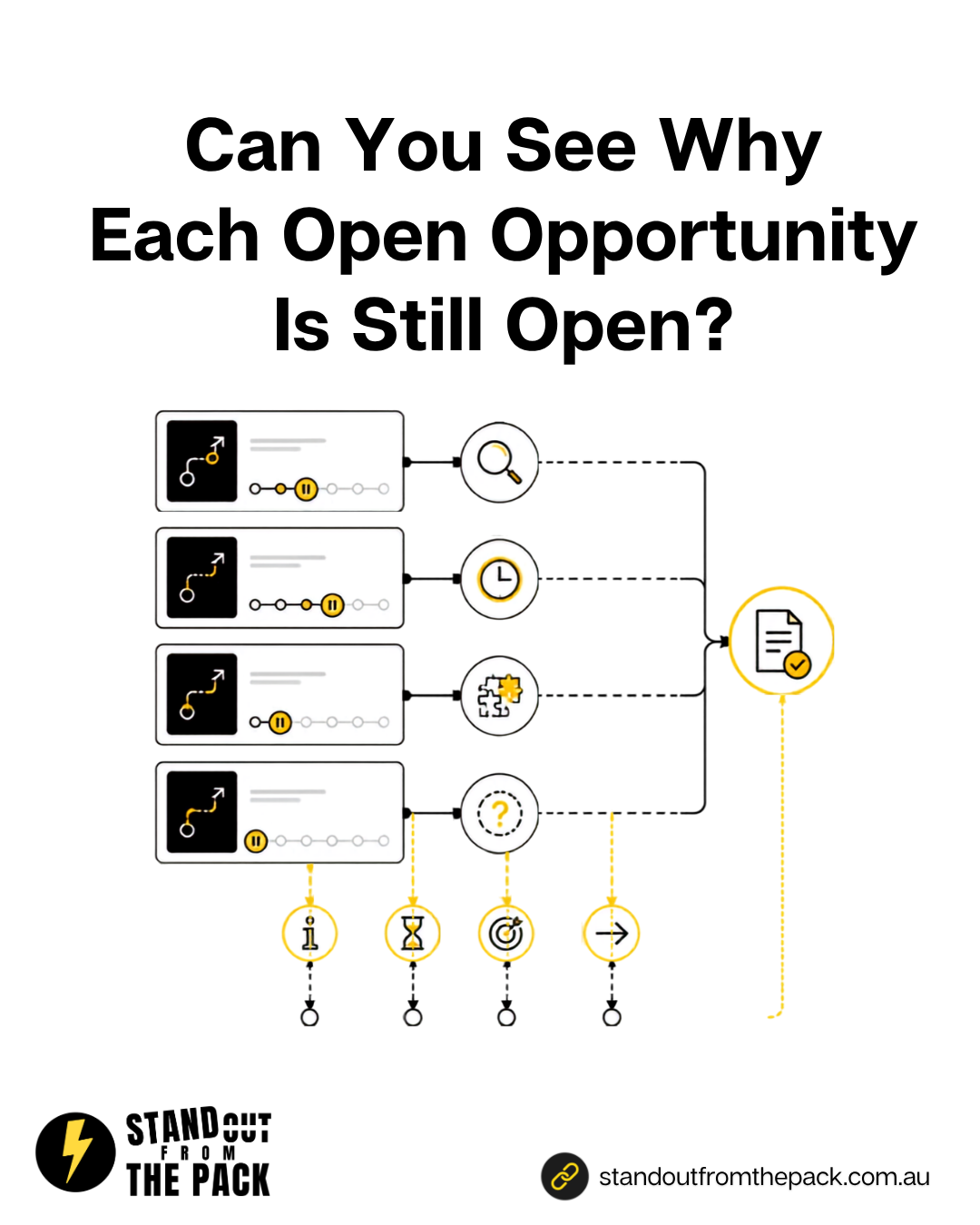
Every customer has the tools for this from day one: pipelines with stages you can name to match your sales process, custom fields for the waiting reason and follow-up date, automations that create tasks and send messages when an opportunity changes stage, reminders when a follow-up date arrives, and pipeline views that show how long each opportunity has been sitting where it is. What varies is who sets it up.
- Do it yourself, with support. Every plan includes onboarding for the owner and the team, a knowledge base with 50 plus interactive guides, 24/7 live chat with real people and weekly Open Office Hours (all on our support page). Bring your current stages and ten real opportunities to Office Hours and we will help you work out the stages your pipeline actually needs.
- Get the foundations done for you. Our done-for-you account setup connects your phone, email, calendar and inbox, so every conversation with a prospect sits on their record where the whole team can see it.
- Have us build it. Sales pipelines with stage-based follow-up are part of the systems in our Profit Roadmap. A single job like "rebuild our pipeline stages with reasons, dates and automatic tasks" sits on our services menu, and a full sales process build across teams becomes a custom project.
Two stages worth adding straight away are "Thinking it over" and "Waiting on another decision maker". This week's pieces on following up when a prospect needs to think about it and building a journey for every decision maker show what should happen in each.
What just happened behind the scenes of this article?
A small example of a stage that knows its next action.
Today's social post asked you to comment SYSTEM. When you did, an automation picked up the comment and, within a minute, Alfie (Vit's AI sidekick) sent you a direct message with this article.
That comment was not just noted somewhere for someone to deal with later. It was a clear position (you asked for this article) with a clear next action (send it) and a deadline measured in seconds. If you reply to Alfie, the conversation lands in our inbox with your name on it and the full history in front of whoever picks it up, so there is never a mystery about what you are waiting for.
It runs in our own account on the same platform our customers use, built the way any of them could build it, or have us build it for them.
A quick check for your own business
- Do any of your pipeline stages have names like Open, Pending or Follow-up?
- Could anyone on your team say what each open opportunity is waiting for?
- Does every waiting stage have a date when someone will check in?
- Does moving an opportunity to a new stage create the next task automatically?
- Would you know which opportunities have been sitting untouched for more than two weeks?
Frequently asked questions
How many pipeline stages should a small business have? Most service businesses do well with five to seven, from first enquiry to won or lost. Enough to show where the customer is, few enough that the team actually uses them.
Should we have separate pipelines for different services? Only if the sales process is genuinely different, for example a quick residential job versus a long commercial tender. Otherwise one pipeline with a service field keeps things simpler.
What is the difference between a stage and a task? A stage describes where the customer is in their decision. A task is something your team needs to do. Good stages create the right tasks automatically.
How often should we review the pipeline? A short weekly review of flagged and stalled opportunities works for most teams. The automations handle the routine follow-up, and the review catches the exceptions.
Want to make your sales process easier to understand? Comment SYSTEM on the post on Facebook or Instagram and we will take it from there.




Live, Practical, Zero Jargon
Short sessions on follow-up, systems and AI you can put to work the same afternoon. Get on the list and we'll tell you when the next one's on.
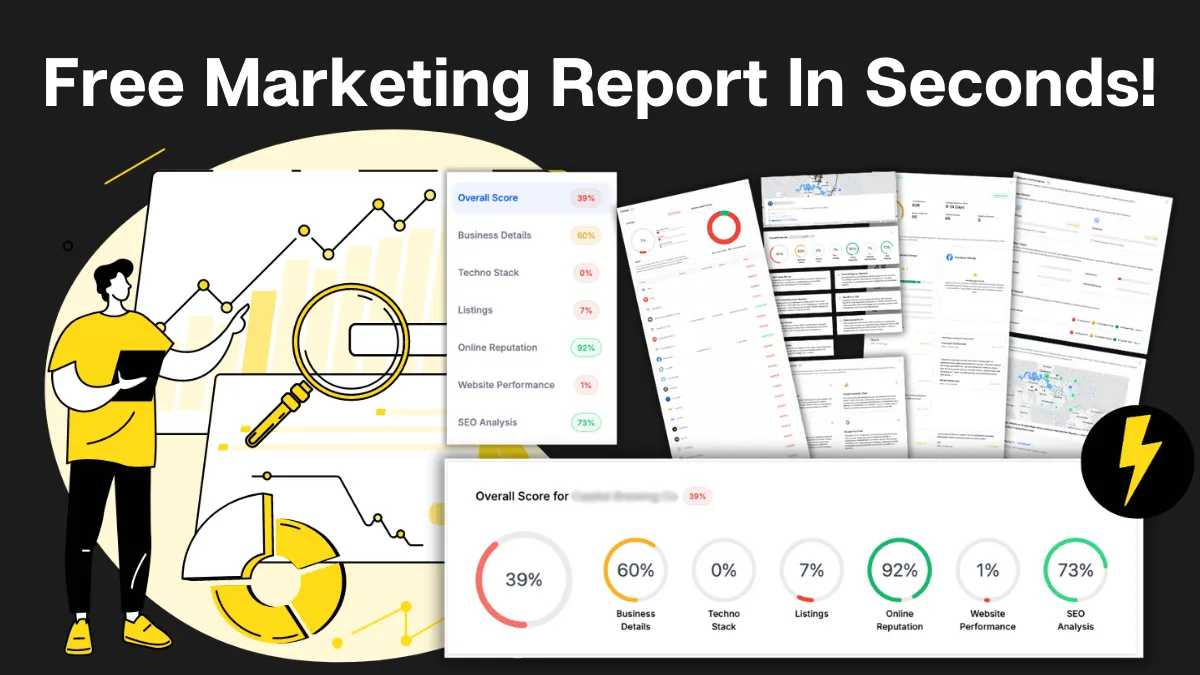
How Do You Stack Up Against the Business Down the Road?
See how you show up online next to competitors near you: reviews, listings, visibility. Free, and no homework required.

Supercharge Your Business!
Transform your business growth with our all-in-one sales and marketing software. Capture, nurture, and close more leads with ease. Don't miss out on the opportunity to streamline your operations and drive success.

See It Working Before You Talk to Anyone
Watch an enquiry get caught, answered and booked in without you glued to your phone. Your pace, no pressure.

Never miss an update from Business Booster Insights. Subscribe to our 'Level Up Newsletter' and get expert tips, strategies, and exclusive content delivered straight to your inbox. Elevate your business game today!
Your Clients Need Better Follow-Up. You Could Earn From It.
Accountants, coaches and consultants spot leaky businesses every day. Recommend the fix and earn ongoing commission.

Where Are Your Enquiries Going Cold?
Answer a few quick questions and see exactly where leads slip between "just asking" and "let's book." Takes less time than your next coffee order.
Still Handing Out Cards That End Up in the Wash?
Share your details in one tap so people can save you, call you or book you on the spot. Yours free.