


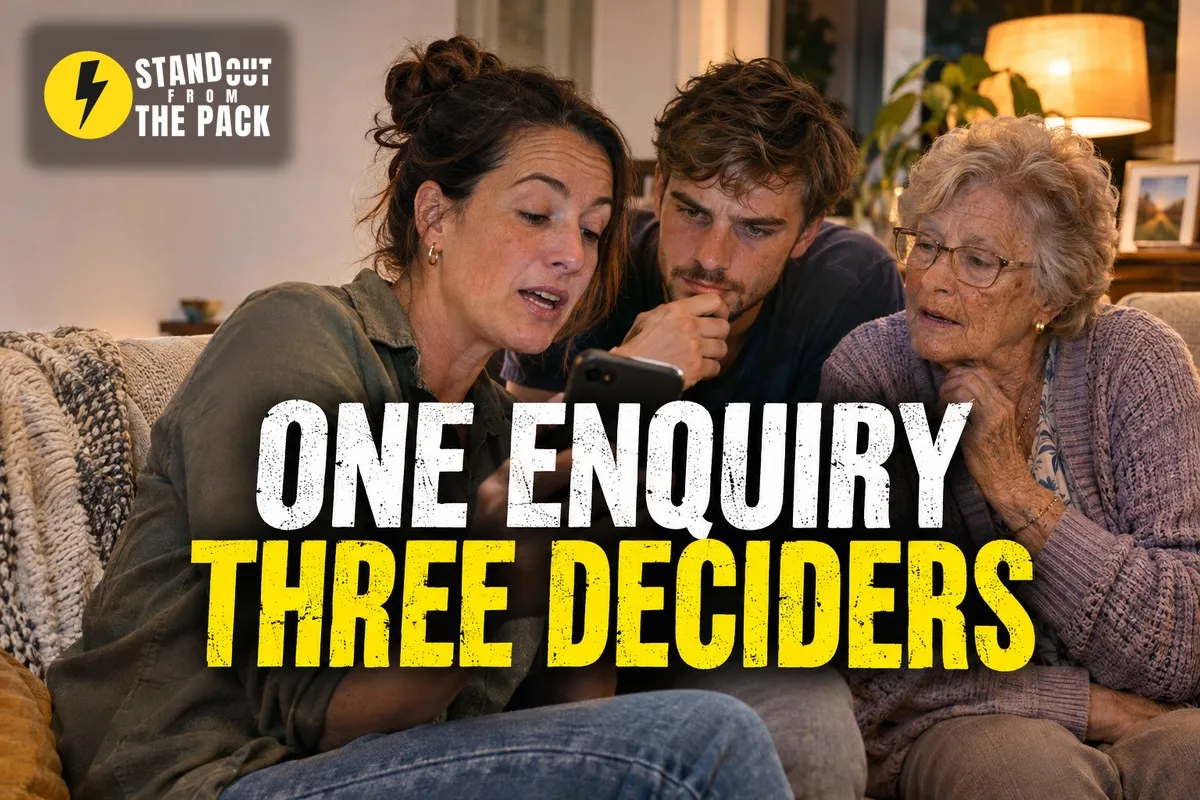
One Enquiry, Three Decision Makers. Is Your Journey Ready?
I keep noticing something about the enquiries that go quiet. The person who filled in the form was keen. The person they had to convince never heard from you.
Picture a home care provider in a coastal town. On a Wednesday night, a woman called Sarah fills in the enquiry form on their website. Her mum, who is 84, has had a fall and is not coping at home on her own. Sarah wants to know about help a few days a week. The provider calls her back the next morning, it is a lovely conversation, and she gets an email with a brochure and a link to book an assessment.
Now look at who else is in that decision.
There is Sarah's brother, Michael, who lives four hours away and handles Mum's finances. His questions are all about cost, contracts and what happens if they want to stop. There is Mum herself, who has not agreed to anything yet, and whose questions are simpler and much harder: will strangers be coming into my house, and will I still get to do things my way?
On Sunday, the three of them sit in Mum's living room and Sarah tries to explain everything from memory. Michael asks about the cancellation terms. Sarah does not know. Mum asks who would actually come. Sarah does not know that either.
The conversation ends with "let's look into it a bit more". The assessment never gets booked.
Here is the thing. The provider did nothing wrong in their conversation with Sarah. They just built a journey for one person, and the decision belonged to three.
Why does a journey built for one person stall?
Because every extra decision maker brings their own questions, and none of them were in the room when the answers were given.
Each person cares about something different. The person who enquires usually cares about solving the problem. The person paying cares about cost and risk. The person affected cares about how it will feel. One brochure cannot speak to all three.
Information gets scattered. A phone call here, an email there, a text with a link. By the time the family, the business partners or the management team sit down to decide, the details are spread across three inboxes and one person's memory.
Second-hand explanations lose detail. Your prospect is not your salesperson, and every retelling gets a little less accurate.
Unanswered questions feel like risk. When someone at the table asks a question nobody can answer, it sits there. And risk delays decisions far more reliably than price does.
And this is why so many promising opportunities do not end with a no. They just lose momentum somewhere between your first conversation and the second one you were never part of.
How do you build a journey for the whole decision?
Back in September we wrote about helping one prospect explain your offer to someone else, with a personal recap after each conversation. This is the bigger picture: designing the whole journey around everyone involved, so it does not depend on the recap alone. Six steps.
1. Map who is usually involved in the decision. Look at your last ten sales and write down who actually had a say. For a home care provider, it might be the adult child, a sibling and the parent. For an accounting firm, the owner and their business partner. For a builder, a couple and sometimes the bank. You will quickly see a pattern, and the pattern is your real customer.
2. Write down what each person needs to know. For each role, list the three or four questions they will ask. The payer wants pricing, terms and what happens if it does not work out. The user wants to know what will change in their day. The approver wants to know why this option, and why now. These lists become the backbone of your information.
3. Create one clear, shareable summary. A short page or document that covers the process step by step, realistic expectations and timeframes, the common questions from every role, relevant proof (reviews, a short story from someone in a similar situation) and the next available action. Make it a link, not a heavy attachment, so it can be forwarded in a text and opened on any phone.
4. Deliver it automatically at the right moment. Do not rely on someone remembering to send it. Have it go out straight after the first conversation, and again when a quote or proposal is sent, so every person who sees it sees the same version. Consistent information is what stops "but I thought you said" conversations.
5. Invite the other people in. Ask early: "Is anyone else involved in this decision?" Then make it easy for them to join. Offer a short call that suits everyone, or a way to ask questions directly. Record their names and roles on the record, so your team knows who they are when they call.
6. Watch for the stall, and help it along. Give opportunities that are waiting on another decision maker their own stage, so you can see them. If nothing moves after a few days, send something aimed at the person you have not met: "Happy to answer any questions Michael has about the agreement, here is a plain-English summary of how it works."
The thread through all six: you cannot be in the living room, so send something that can be.
What usually goes wrong?
Writing only for the person who enquired. Preparing beautifully for the person on the phone and not at all for anyone else. Ask who reads this next, and what they need.
A brochure instead of a summary. Generic marketing material answers the questions you wish people asked. A good summary answers the ones they actually ask, in plain language.
Different information in different places. The website says one thing, the email says another and the team says a third. Every decision maker should see the same process, the same pricing structure and the same next step.
Hiding the awkward bits. Cancellation terms, ongoing costs and what happens if it does not work out are exactly the questions the second decision maker will ask. Answer them upfront. Leaving them out does not make them go away, it just makes your prospect look unprepared at the table.
No next step for the group. If the only next step is "call us when you are ready", the group will default to waiting. Offer something specific, like a joint call, an assessment or a site visit, with an easy way to book.
Why is this better than the alternatives?
"We let the prospect explain it." They will try, relaying a conversation they had once to people with different worries. That is a lot to ask of someone already dealing with the problem.
"We push to speak with the decision maker directly." Sometimes that works. Often it feels like you are going over your prospect's head, and some decision makers simply will not get on a call. Giving them clear information to read in their own time respects how they want to decide.
"We send everything we have." More information is not the same as clearer information. A folder of PDFs gets skimmed by one person and ignored by the rest. Between us, nobody has ever said "I loved the 24 page brochure, let's go ahead".
Supporting the whole decision is better because it matches how people actually buy anything important. Strong customer journeys support the entire decision, not just the first contact.
How does this work inside Stand Out From The Pack?
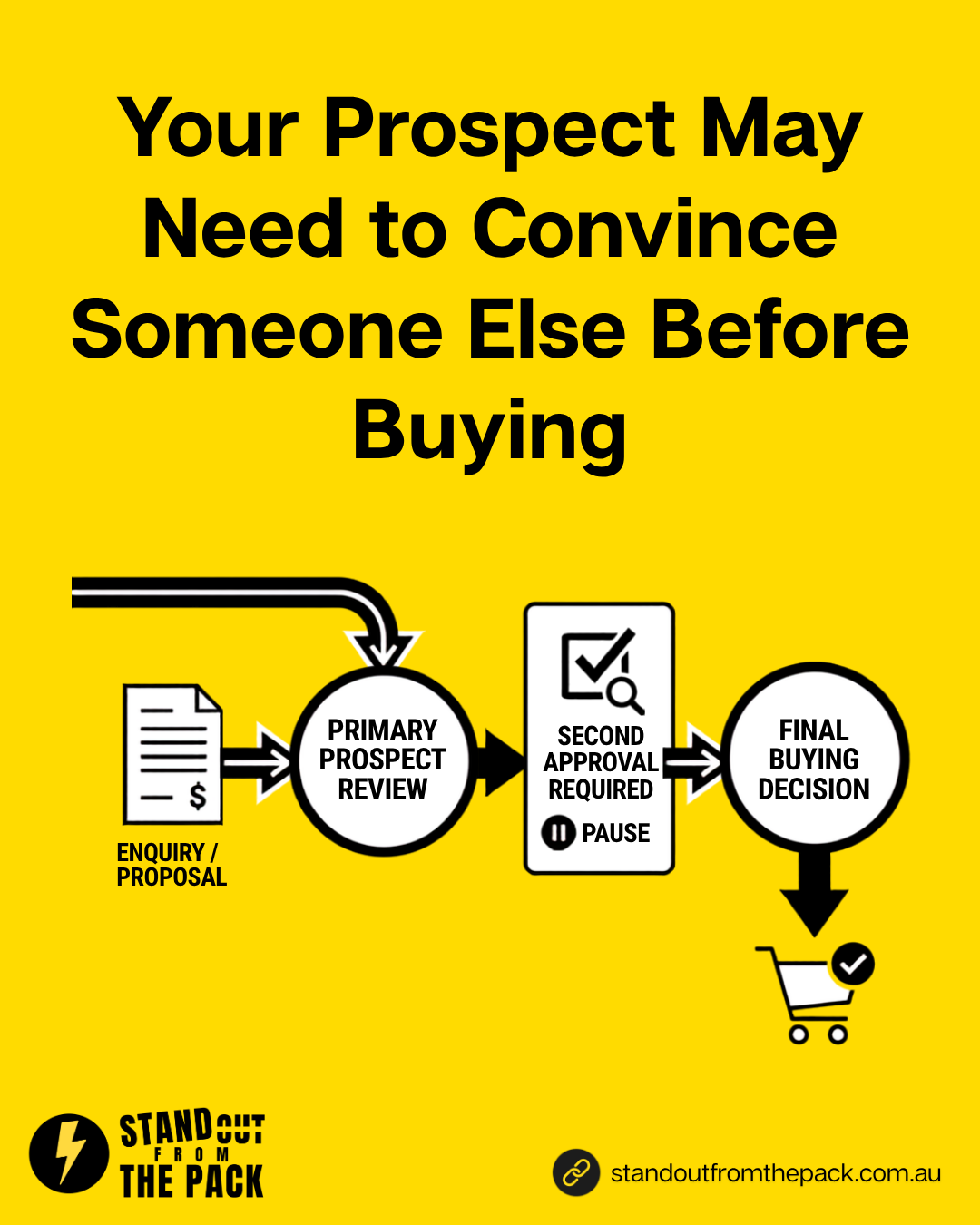
Every customer has the tools for this from day one: pages or documents you can share as a simple link, email and text templates, automations that send the summary after a call or when a proposal goes out, custom fields to record who else is involved, booking calendars for a joint call, and a pipeline stage for opportunities waiting on another decision maker. What varies is who sets it up.
- Do it yourself, with support. Every plan includes onboarding for the owner and the team, a knowledge base with 50 plus interactive guides, 24/7 live chat with real people and weekly Open Office Hours (all on our support page). Bring the list of who usually has a say in your sales to Office Hours and we will help you plan what each of them should receive.
- Get the foundations done for you. Our done-for-you account setup gets your email, phone, calendar and inbox connected properly, so your summaries land and every reply comes back to one place.
- Have us build it. Customer journeys that support every decision maker are part of the systems in our Profit Roadmap. A single job like "send a shareable decision summary after every first meeting" sits on our services menu, and a full multi-stakeholder journey becomes a custom project.
Often the other decision maker is the reason behind "I need to think about it". Monday's piece on following up when a prospect needs to think about it covers how to find out, and what to send next.
What just happened behind the scenes of this article?
A small example of information built to be shared.
Today's social post asked you to comment JOURNEY. When you did, an automation picked up the comment and, within a minute, Alfie (Vit's AI sidekick) sent you a direct message with this article.
Notice what you received. Not a "call us to find out more", but a link to a full page that explains the topic, the steps and the common mistakes. You can read it now, read it later or forward it to a business partner, and they will see exactly what you saw. That is the shareable summary from this article, applied to our own funnel.
It runs in our own account on the same platform our customers use, built the way any of them could build it, or have us build it for them.
A quick check for your own business
- Do you know who usually has a say in a decision to buy from you?
- Do you ask early whether anyone else is involved, and record who they are?
- Is there one clear summary a prospect can forward to everyone involved?
- Does that summary answer the awkward questions, like cancellation and ongoing costs?
- Can you see which opportunities are waiting on someone you have never spoken to?
Frequently asked questions
What should a decision summary include? The process step by step, realistic expectations and timeframes, how pricing works, answers to the most common questions from each person involved, some relevant proof and one clear next step. Keep it short enough to read on a phone.
Should it be personalised or the same for everyone? Both work well together. A consistent summary page keeps the facts identical for everyone, and a short personal note on top connects it to that customer's situation.
What if the other decision maker never contacts us? That is common, and fine. The goal is not to get them on the phone. It is to make sure that when they ask a question at the table, there is a clear answer in front of them.
Does this work for business customers too? Absolutely. Swap the brother and the parent for a business partner, a finance manager or an operations lead. The roles have different titles, but they ask the same kinds of questions.
Does your buying journey involve more than one decision maker? Comment JOURNEY on the post on Facebook or Instagram and we will take it from there.



Live, Practical, Zero Jargon
Short sessions on follow-up, systems and AI you can put to work the same afternoon. Get on the list and we'll tell you when the next one's on.
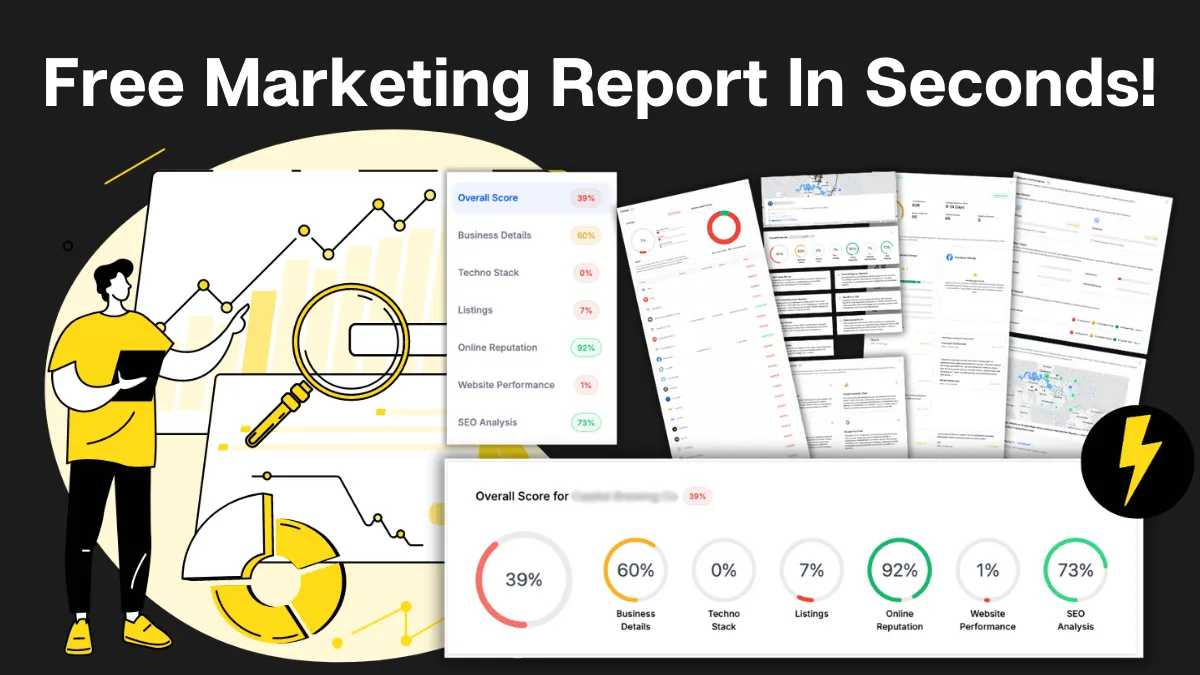
How Do You Stack Up Against the Business Down the Road?
See how you show up online next to competitors near you: reviews, listings, visibility. Free, and no homework required.

Supercharge Your Business!
Transform your business growth with our all-in-one sales and marketing software. Capture, nurture, and close more leads with ease. Don't miss out on the opportunity to streamline your operations and drive success.

See It Working Before You Talk to Anyone
Watch an enquiry get caught, answered and booked in without you glued to your phone. Your pace, no pressure.

Never miss an update from Business Booster Insights. Subscribe to our 'Level Up Newsletter' and get expert tips, strategies, and exclusive content delivered straight to your inbox. Elevate your business game today!
Your Clients Need Better Follow-Up. You Could Earn From It.
Accountants, coaches and consultants spot leaky businesses every day. Recommend the fix and earn ongoing commission.
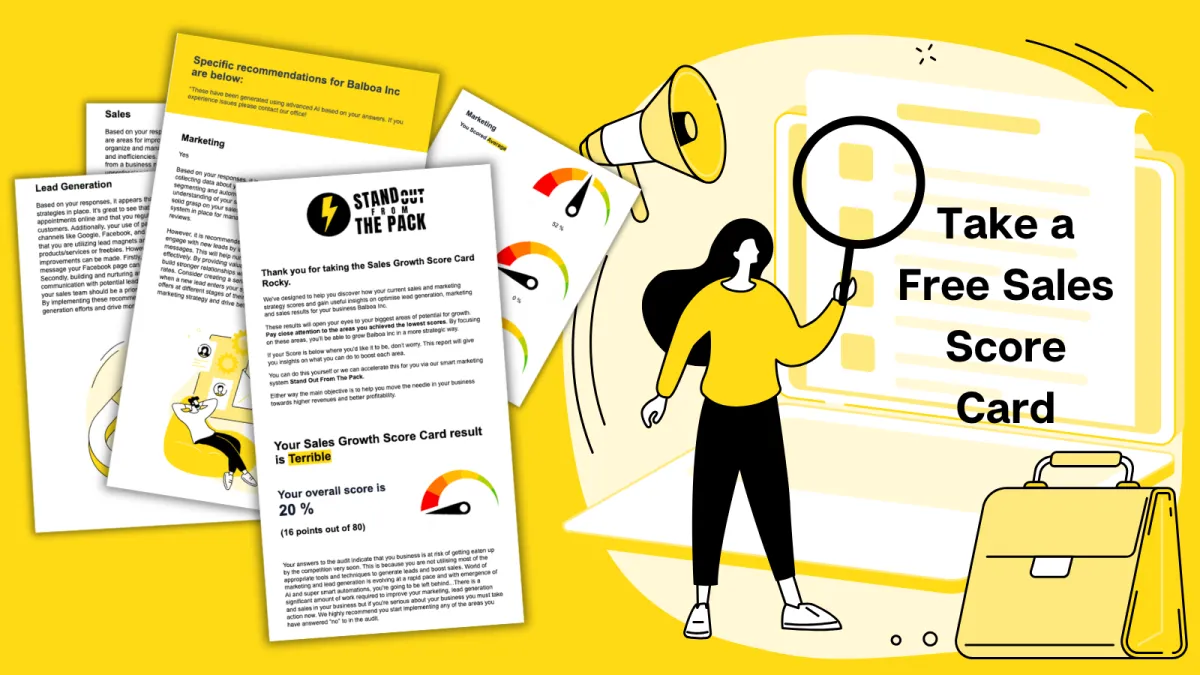
Where Are Your Enquiries Going Cold?
Answer a few quick questions and see exactly where leads slip between "just asking" and "let's book." Takes less time than your next coffee order.
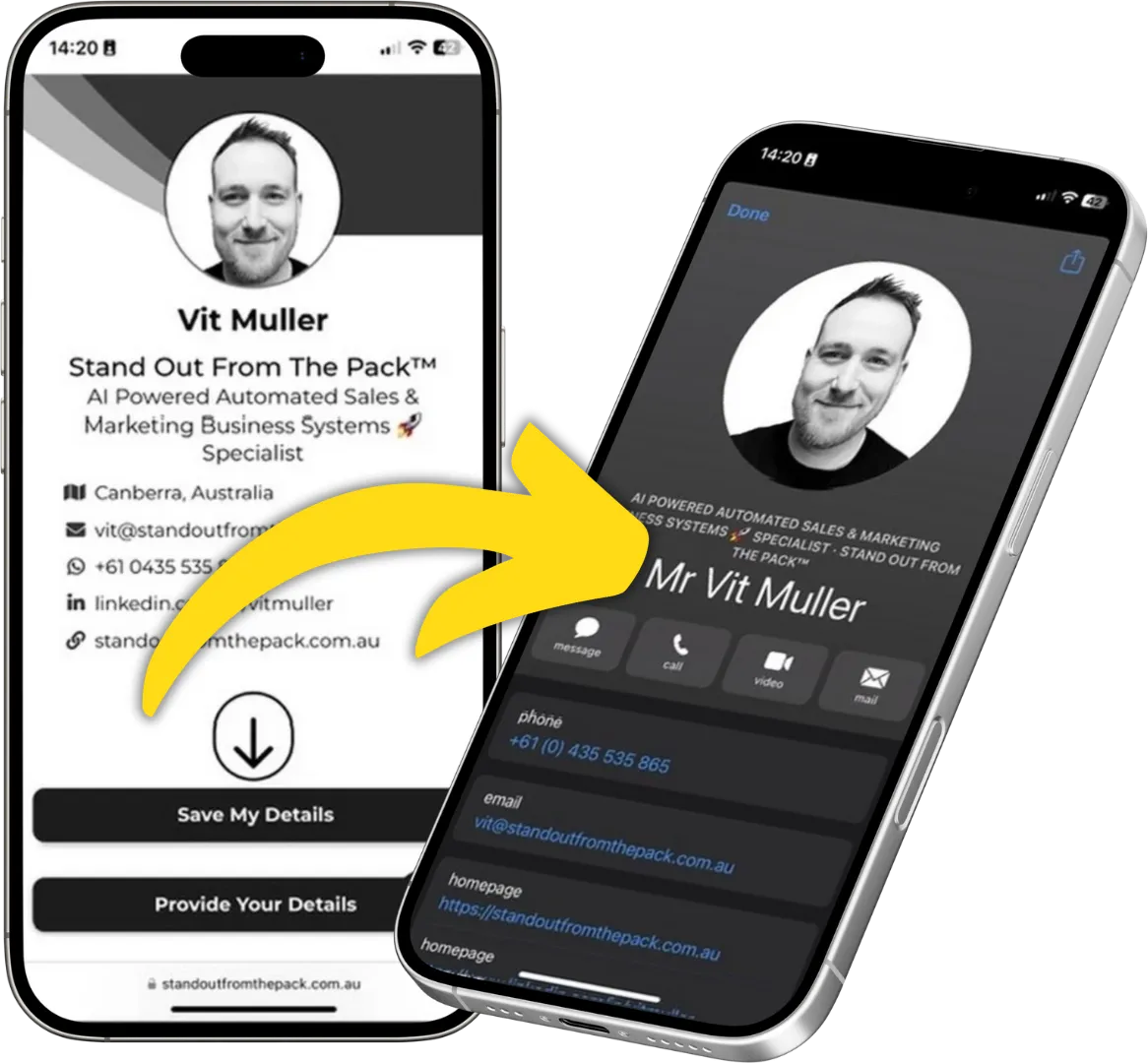
Still Handing Out Cards That End Up in the Wash?
Share your details in one tap so people can save you, call you or book you on the spot. Yours free.