


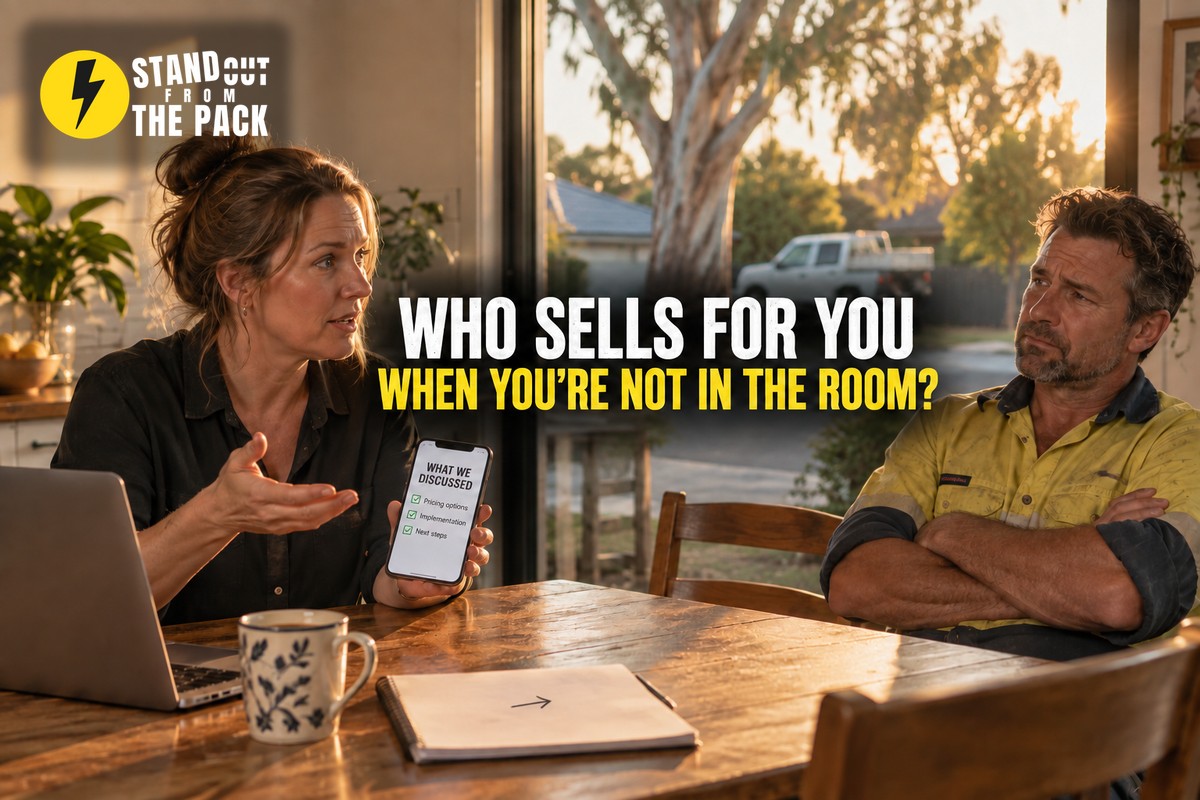
When Your Customer Has to Explain Your Offer to Someone Else
You know the feeling. You have just had a genuinely great conversation with a prospect. They got it. They were nodding. At one point they said "oh that would fix so many things for us". And then, right at the end, the sentence that every business owner has learned to dread:
"Let me just run it past my partner and I will get back to you."
And then.. nothing. Not a no. Not a yes. Just a slow fade into silence, and three weeks later you are staring at the deal in your pipeline wondering what on earth happened.
Well, I can tell you what happened, because I have watched it play out a hundred times. That evening, your prospect sat at the kitchen table and tried to explain a 40 minute conversation from memory. They got the price roughly right. They forgot two of the three things that impressed them. Their partner asked one perfectly reasonable question, "so what happens if we want to cancel?", and your prospect did not know. And the whole thing got parked with the four most expensive words in sales: "let's think about it."
Nobody said no. The decision just ran out of energy.
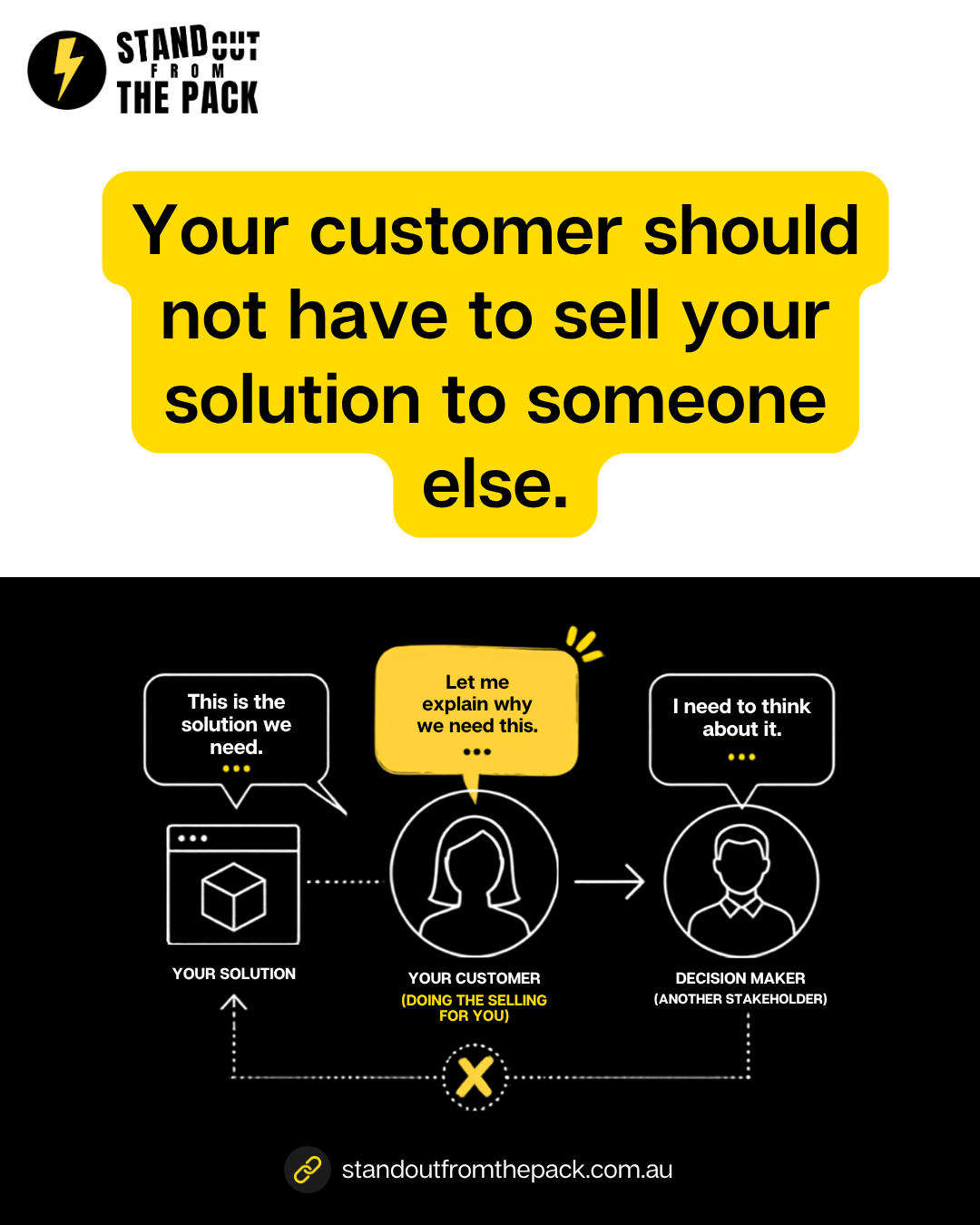
Between us, this is my favourite kind of problem to fix, because it is so rarely about the offer. The family choosing an aged care provider. The couple comparing modular home builders. The practice manager who has to take a new booking system to the practice owner. In every one of these, the person you are talking to is not the only person deciding, and you are relying on them to be your salesperson without giving them anything to sell with.
Why does the sale stall when a second decision maker is involved?
Three things go wrong at the same time, and they compound.
Context gets lost. Your prospect remembers the feeling of the conversation, not the detail. And the specific bits that made it click for them are exactly the bits that are hardest to repeat to someone who was not there.
Questions go unanswered. The second person asks something obvious. Cancellation, setup time, what is included. Your prospect does not know, so now there is an open question sitting in the room. And an unanswered question feels like a risk, and risk delays decisions. Every time.
The timeline disappears. In your conversation there was a clear next step. At the kitchen table there is not. Without a next step, "let's think about it" becomes the default, and a week later the enquiry is cold.
None of this is your prospect's fault. They are doing their best to represent something they heard once. The fix is on our side, and it is simpler than you would think: make it easy for them to bring the other person into the conversation without having to remember everything.
How do you make the next step easy for the customer?
This is the follow-up structure we build for clients who sell anything with more than one decision maker, which, if you think about it, is most things over a few hundred dollars. None of it is complicated. The trick is that it has to happen every time, not just when someone remembers.
1. Ask who else is involved, early. Somewhere in the first conversation: "Is there anyone else who will be part of this decision?" It is not pushy, it is practical. And it does something lovely: it tells the prospect you understand how their world works. Now you know the follow-up needs to land with two people, not one.
2. Send a written summary within the hour. Not a brochure. A short, personal recap of what you discussed. What was proposed, what it costs, why it fits their situation, what happens next. Written so it can be forwarded exactly as it is. Because if your prospect can hit forward and the other person understands the whole picture in two minutes, you have just done their job for them.
3. Answer the questions the other person will ask. You already know what they are. You hear them every single week. Cancellation, timing, what is included, what happens if something goes wrong. Put the top five in the recap. You are answering the kitchen table objections before they get raised at the kitchen table.
4. Make the other person welcome. Offer a short call or a demo for both of them, with a booking link so they can pick a time that suits everyone. Some will take it, and those conversations close at a much higher rate. The ones who do not still feel looked after, which matters more than you might think.
5. Put the next step on a date. "I will check in on Thursday to see what questions came up." Then actually do it, automatically if you can. That Thursday message is what keeps the decision alive.
6. Keep the full history in one place. When the second person calls with a question, whoever answers should see the whole conversation so far. Nothing kills confidence faster than "sorry, who did you speak to?"
What usually goes wrong?
The summary is a brochure. A PDF full of features is not a summary of their conversation. It is generic, it is long, and the second person will not read it. Keep it personal and keep it short.
It only happens when someone remembers. On a quiet day the recap goes out. On a busy day it does not. And the prospects you lose are the ones who enquired on the busy days. This step has to be built into the system, not left to memory.
The follow-up is "just checking in". That message has zero value in it. Try instead: "Here is the answer to the setup question you mentioned, and here is a two minute video that might help explain it to Mark."
Nobody tracks who is waiting on a second opinion. If you cannot see which opportunities are stuck at "talking to partner", you cannot help them along. This needs a stage in your pipeline, not a mental note.
The team gives up too early. Two follow-ups, then silence. Decisions involving more than one person take longer, that is just the maths. The follow-up needs to keep going, gently, until there is a yes or a clear no.
Why is this better than the alternatives?
"We rely on the prospect to come back to us." Some will. Most will not, and it has nothing to do with whether they wanted to buy. Life got in the way and there was nothing pulling them back.
"We call and chase." Chasing works on the person you spoke to, but it does nothing for the person you did not. And it can feel like pressure at the exact moment they are trying to build agreement at home.
"We send more information." More is not the answer. Clearer is. One page they can forward beats a folder of attachments every time.
The approach above respects that the decision is happening without you, and gives the customer what they need to make it well. That is what a good customer journey actually is.
How does this work inside Stand Out From The Pack?
Nothing in this article needs special software. It needs a pipeline stage, a couple of templates, a booking link, a follow-up sequence and one shared inbox, and every customer has all of those from day one. What varies is who sets it up.
- Do it yourself, with support. Every plan includes onboarding for the owner and the team, a knowledge base and interactive guides, 24/7 live chat with real humans, and weekly Open Office Hours (the full list is on our support page). This exact follow-up flow is a very normal thing to bring to Office Hours and build live with us.
- Get the foundations done for you. Our done-for-you account setup handles the phone, email, calendar and integration plumbing so your recap emails and texts actually land.
- Have us build the sales follow-up for you. The "awaiting other decision maker" stage, the recap templates, the joint call booking link and the two week check-in sequence are part of the Sales Conversion System in our Profit Roadmap, or a custom build if your sales process is more particular.
Whichever route, the outcome is the same: quiet day, busy day, the recap goes out and the check-in happens, because the process lives in the system and not in someone's memory.
What just happened behind the scenes of this article?
A quick aside, because we should be the proof of what we preach.
Today's social post asked you to comment JOURNEY. When you do, an automation picks up your comment, sends you a direct message within a minute with a short guide on this exact topic, and opens a conversation in our inbox with your name on it. If you reply, one of us picks it up with the full history in front of us. If you go quiet, you get one gentle follow-up a couple of days later, and then we leave you alone. Nobody on our team is refreshing the comments. Nobody is copying names into a spreadsheet.
Notice what that is. It is the recap, the answered questions and the dated next step from this article, applied to our own funnel. And it runs on the same platform our customers use, built in our own account exactly the way you could build it in yours, or have us build it with you.
A quick check for your own business
- Do you ask who else is involved in the decision on the first call?
- Does every prospect receive a written recap they could forward to someone else?
- Does that recap answer the five questions the other person is most likely to ask?
- Can you see, right now, how many opportunities are waiting on a second opinion?
- What happens automatically if a prospect goes quiet after saying they will "run it past" someone?
Frequently asked questions
How long should the recap be? Short enough to read on a phone in two minutes. Around 150 to 250 words plus a clear next step. If it needs more, link to a page or a short video rather than making the message longer.
Is it too forward to ask who else is involved? No. Most people appreciate it, because it shows you understand how their decision actually gets made. Frame it as wanting to make things easy for everyone involved.
What if the other decision maker never engages? That is fine. The recap still helps your prospect explain it properly, and the check-in sequence keeps the conversation alive. Not every second decision maker wants to talk to you, but all of them want their questions answered.
Does this apply to business to business sales? Very much so. Swap "partner at the kitchen table" for "practice owner", "finance manager" or "the board" and the process is identical.
Want help mapping this out for your own customer journey? Comment JOURNEY on the post on Facebook or Instagram and we will pick it up from there.



Live, Practical, Zero Jargon
Short sessions on follow-up, systems and AI you can put to work the same afternoon. Get on the list and we'll tell you when the next one's on.
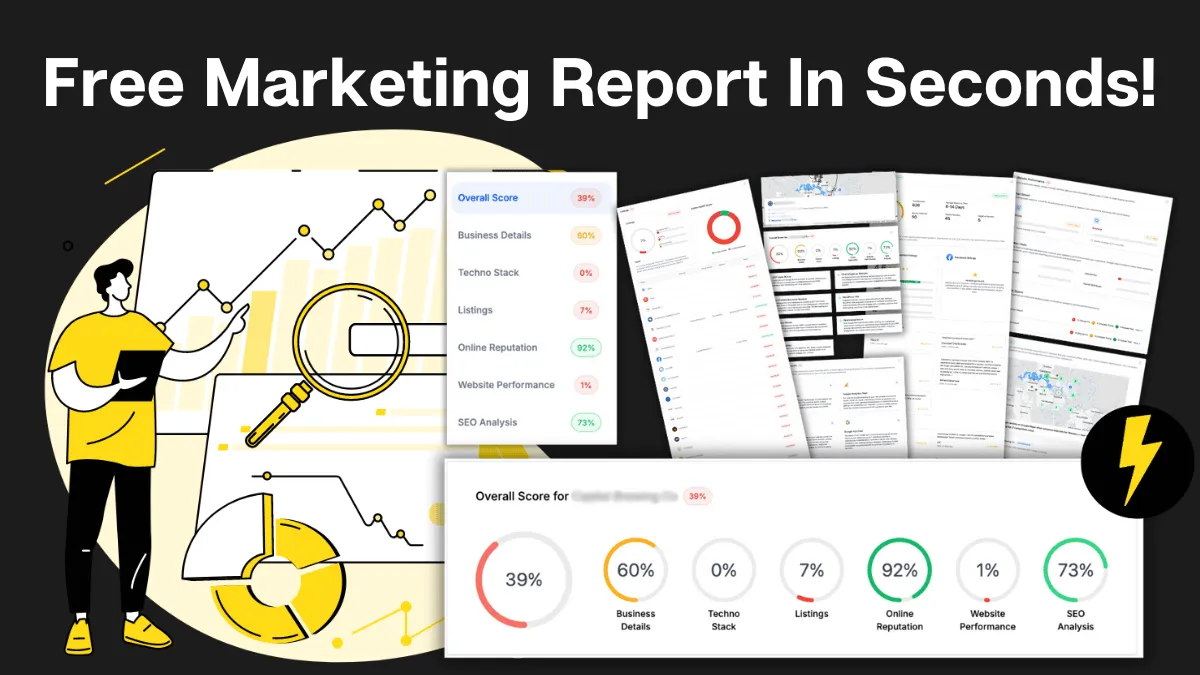
How Do You Stack Up Against the Business Down the Road?
See how you show up online next to competitors near you: reviews, listings, visibility. Free, and no homework required.

Supercharge Your Business!
Transform your business growth with our all-in-one sales and marketing software. Capture, nurture, and close more leads with ease. Don't miss out on the opportunity to streamline your operations and drive success.

See It Working Before You Talk to Anyone
Watch an enquiry get caught, answered and booked in without you glued to your phone. Your pace, no pressure.

Never miss an update from Business Booster Insights. Subscribe to our 'Level Up Newsletter' and get expert tips, strategies, and exclusive content delivered straight to your inbox. Elevate your business game today!
Your Clients Need Better Follow-Up. You Could Earn From It.
Accountants, coaches and consultants spot leaky businesses every day. Recommend the fix and earn ongoing commission.
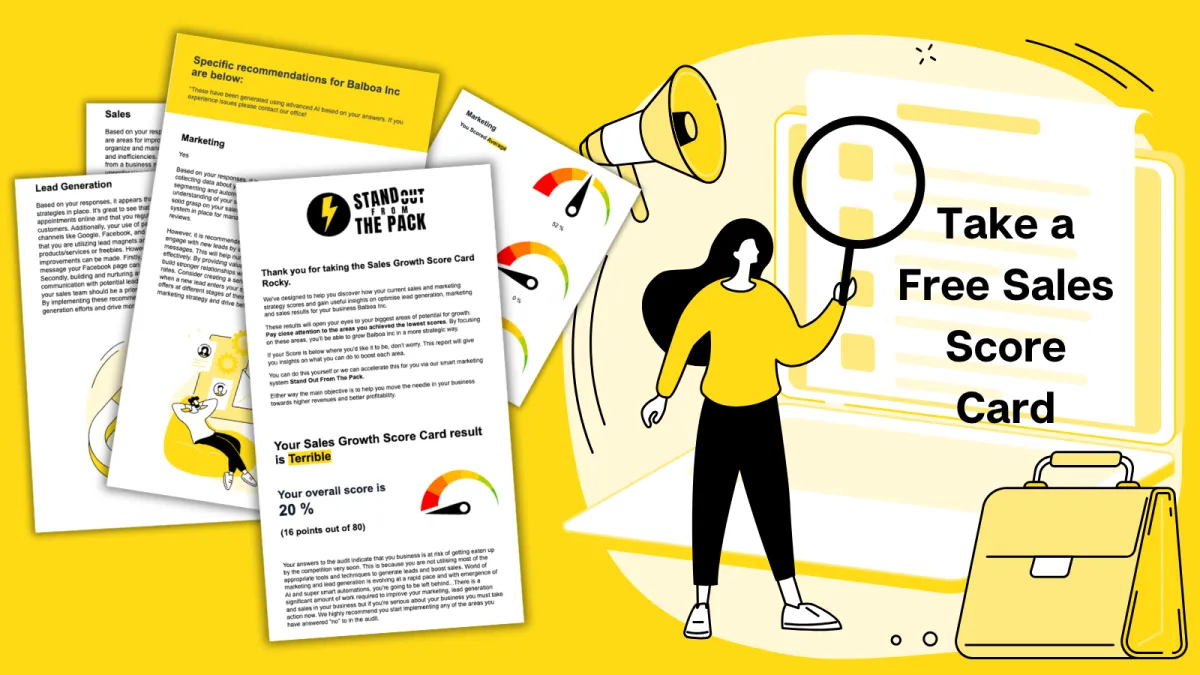
Where Are Your Enquiries Going Cold?
Answer a few quick questions and see exactly where leads slip between "just asking" and "let's book." Takes less time than your next coffee order.
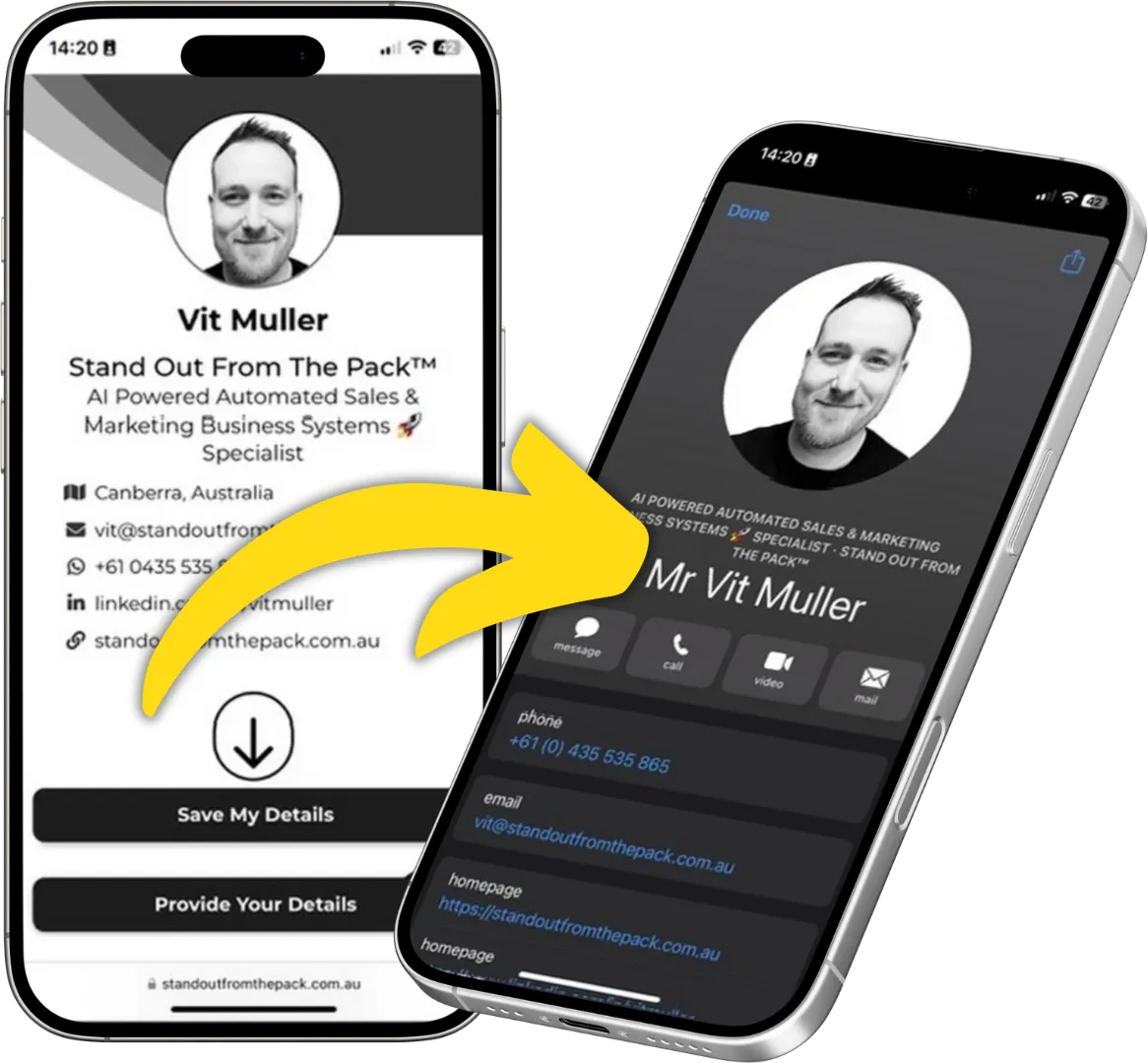
Still Handing Out Cards That End Up in the Wash?
Share your details in one tap so people can save you, call you or book you on the spot. Yours free.