

Your Enquiry Form Says Thank You. Then What?
You know the feeling. You fill in a form on a website, you press submit, and the page says "Thank you. We will be in touch."
And that is it. You are left looking at a blank page, wondering what "in touch" means. Today? Next week? Will they call or email? Should you have attached something?
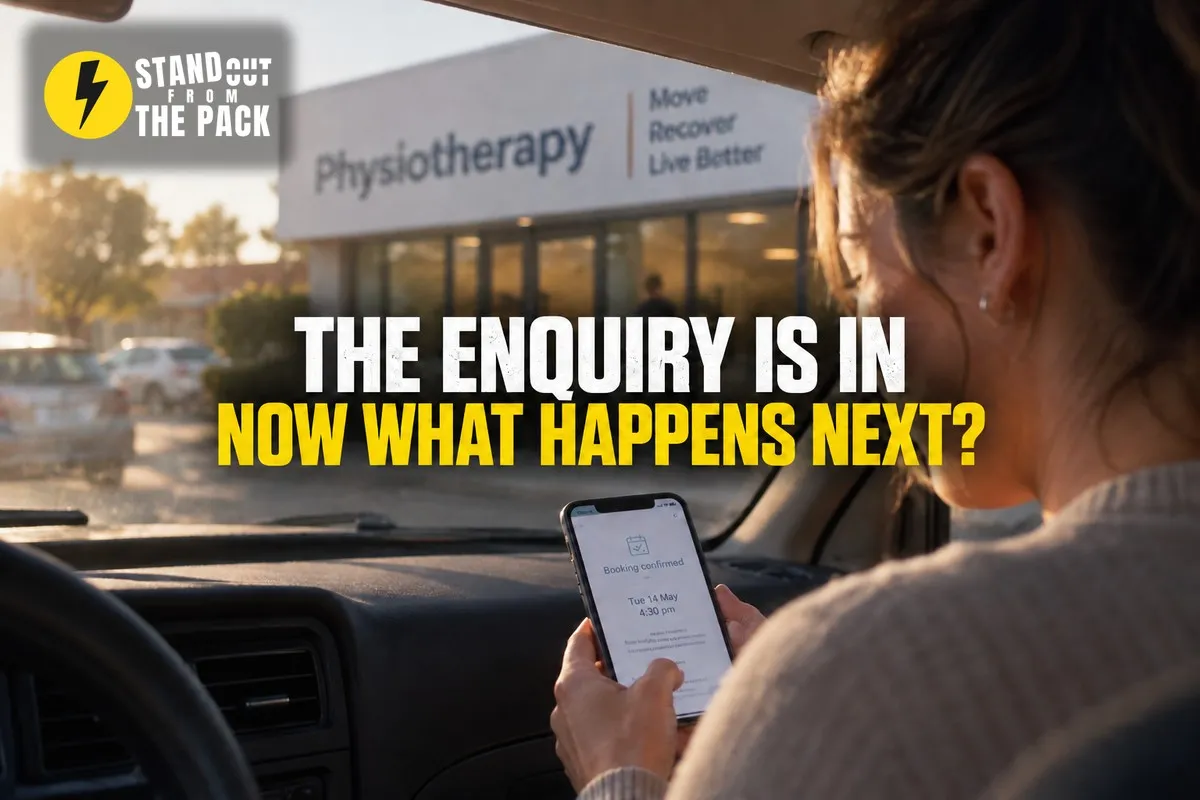
Picture a woman with a sore lower back that has been nagging her for three weeks. It is 8.45 on a Tuesday night, the kids are finally in bed, and she has two physio clinics open in two tabs. Both look good. She fills in the enquiry form on the first one, explains her back, and hits submit.
"Thanks for your enquiry. We will be in touch."
So she does what any of us would do. She fills in the second clinic's form too, just in case.
That second clinic's page says something different. "Thanks Sarah. We have your details and one of our physios will call you before 10am tomorrow. If you would rather not wait, you can book your first appointment right now. Here are the next available times." There is a short note about what to wear and what to bring, and a link to a two minute read on what happens in a first session.
She books Thursday at 7.30am. Before bed.
The next morning, the first clinic calls at 10.15. Sarah is polite, says she has already booked somewhere, and that is the end of it.
Here is the thing. The first clinic did not lose her because they were slow or unfriendly. They captured the enquiry perfectly. They lost her in the thirty seconds after she pressed submit, because the page that was supposed to keep her moving simply.. stopped.
(Sarah is a made-up example, by the way, but if you have ever filled in two forms on the same night, you have been her.)
Why does momentum stall right after someone enquires?
Because most businesses treat the enquiry as the finish line of the website, when for the customer it is the starting line of the relationship.
The form is built to collect, not to guide. A lot of thought goes into which fields to ask for. Almost none goes into what the customer sees the second after. So the default message stays, word for word, the way the website builder left it.
"We will be in touch" answers nothing. It does not say when, how or who. And because the customer cannot see your inbox, silence feels exactly the same as being forgotten.
The customer is at peak interest. That moment right after submitting is the warmest they will ever be. They have just described their problem and they want to move. Give them nothing to do and that energy goes somewhere else, often to a competitor's form.
The team does not see it as their job. The website is "marketing", the call back is "sales" or "reception". The few seconds in between belong to nobody, so nobody improves them.
And this is why a business can get the form and the phone call right, and still lose the customer in between.
How do you turn a thank-you page into a next step?
Think of it as the first page of the customer journey, not the last page of the form. Six steps.
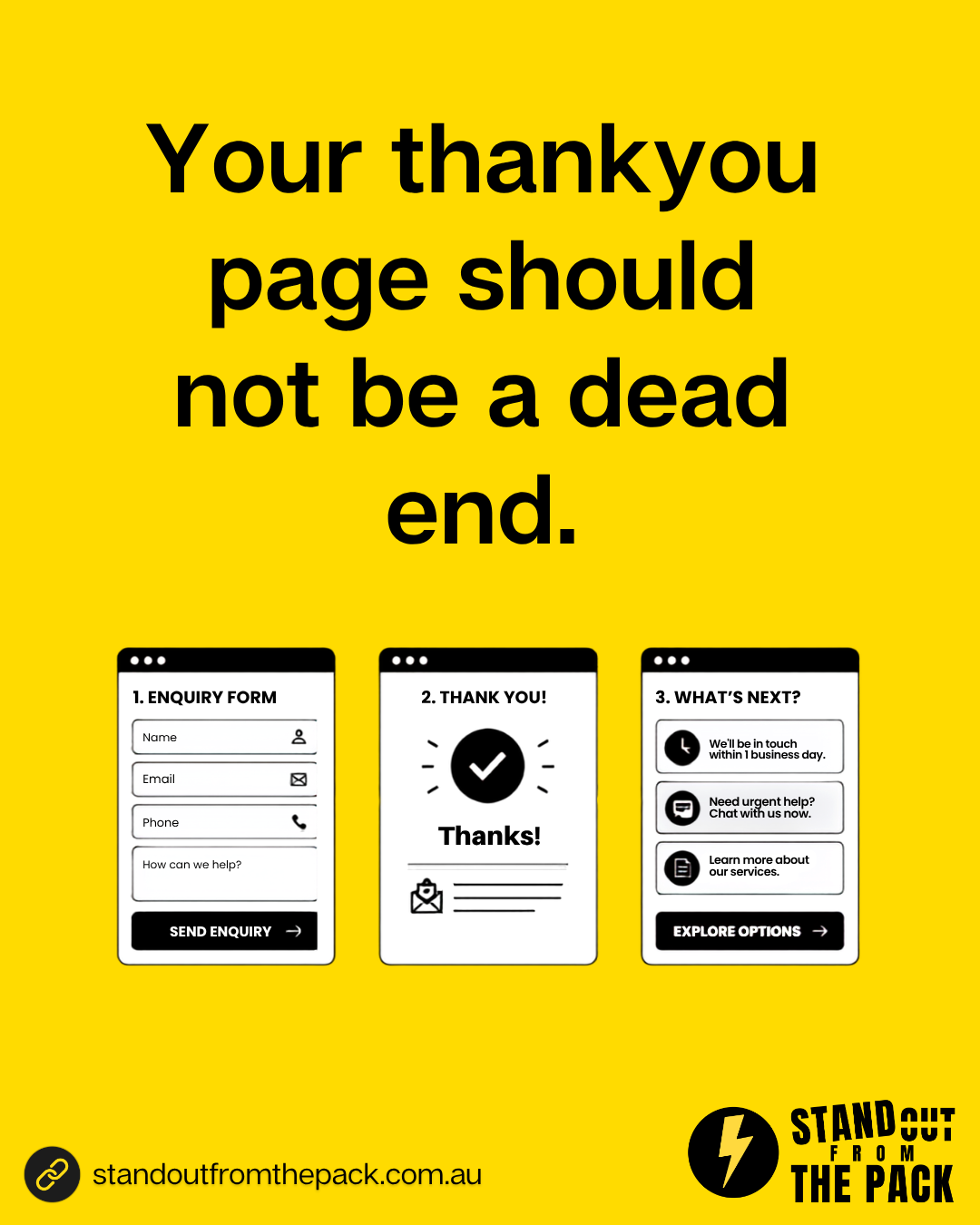
1. Confirm what you received, in plain words. Use their first name and repeat the core of what they asked for. "Thanks Sarah, we have your enquiry about lower back pain." It tells them the form actually worked.
2. Say exactly when and how you will respond. "One of our team will call you before 10am tomorrow" beats "soon" every time. If you cannot respond quickly on weekends, say so honestly and give the real time. A clear Monday morning promise is better than a vague one you might break.
3. Offer one useful next step. Just one. For a clinic or studio, that is usually "book your first appointment now". For a tradie, "upload a photo of the problem so we can quote faster". For an accountant, "book a 15 minute discovery call". One clear option, matched to the enquiry, so the customer can keep moving if they want to.
4. Tell them how to prepare. What should they have ready for the call? What should they bring? A short list of two or three items makes the first conversation better for both sides, and it shows you have done this a thousand times.
5. Give them something useful to read while they wait. A relevant article, a short "what to expect" page, or answers to the three questions people always ask. Not a sales brochure. Something that helps them understand their problem or your process a little better.
6. Send the same promise as a message, and start the clock on your side. The page disappears when they close the tab, so send a short confirmation by text or email that repeats the response time and the next step. At the same moment, the enquiry should land with a named owner, with a task due before the promised time. The page makes a promise. The system makes sure someone keeps it.
That last step is where the magic is. A great thank-you page with nobody behind it is just a nicer way of disappointing people.
What usually goes wrong?
Promising a time you cannot keep. "We will call within 15 minutes" sounds impressive, until the one busy afternoon when it takes three hours. Promise what you can do on your worst normal day, then beat it.
Too many options. Book a call, download a guide, follow us on social, read the blog, join the newsletter. Five buttons is the same as no button. Pick the one step that moves this enquiry forward.
One page for every enquiry. Someone asking for an emergency repair and someone asking about a maintenance plan need different next steps. If you have a few very different enquiry types, give each its own thank-you page, or at least its own message.
The confirmation never arrives. The message goes to spam, or the phone number field was optional so there is nowhere to send it. Test it from your own phone and a personal email address, then test it again every few months.
Nobody owns the follow-up. The page says "before 10am tomorrow" and the enquiry sits in a shared inbox until 2pm. The promise was made by the website and broken by the team, and the customer only sees the broken part.
Why is this better than the alternatives?
"We just call everyone back quickly." Brilliant, keep doing that. But even a fast call back has a gap, and the customer fills that gap with the next tab. A good page and message mean they are waiting for your call, not shopping around while they wait.
"We will send a nurture sequence." Nurture is useful later. In the first few minutes, nobody wants a five email welcome series. They want to know what happens next and whether they can get on with it.
"Our website looks great already." I am sure it does. Between us, the thank-you page is the one page most business owners have never actually looked at. Go and submit your own form tonight. It is a slightly humbling exercise.
The payoff is simple. More enquiries turn into booked conversations, fewer people fill in a second form "just in case", and your team starts every call with a customer who already knows what to expect. If you have already trimmed your enquiry form so it asks less, this is the natural next step: make the moment after it count just as much.
How does this work inside Stand Out From The Pack?
Everything above is built from forms with a custom thank-you page or redirect, an online booking calendar, an automation that sends an instant text and email confirmation, and a rule that assigns the new contact to an owner with a task due before the promised response time. Every customer on every plan has those tools from day one. The only question is who sets them up.
- Do it yourself, with support. Every plan includes onboarding for the owner and the team, a knowledge base with 50 plus interactive guides, 24/7 live chat with real people and weekly Open Office Hours (all on our support page). Bring your current thank-you page to Office Hours and we will help you rewrite it and connect the confirmation, live.
- Get the foundations done for you. Our done-for-you account setup connects your phone number, email and inbox properly, so that confirmation message actually lands instead of disappearing into spam.
- Have us build it. Instant enquiry response and follow-up are part of the systems in our Profit Roadmap. A single job like "build a thank-you page with booking and an instant confirmation" sits on our services menu, and a full multi-service enquiry flow becomes a custom project.
And if your enquiry form still asks people to pick from a list of your departments, have a look at letting customers describe what they need in their own words. The two fixes work beautifully together.
What just happened behind the scenes of this article?
Funny thing. You might have arrived here through exactly the kind of moment this article is about.
Today's social post asked you to comment LEADS. When you did, an automation picked up the comment and sent you a direct message within a minute with this article. That message is our version of a thank-you page. It confirms we saw your comment, it gives you one useful next step (reading this), and it opens a conversation you can reply to if you want to go further.
What we deliberately did not do is leave you with "thanks, we will be in touch". It runs in our own account on the same platform our customers use, built the way any of them could build it, or have us build it for them.
A quick check for your own business
- When did you last submit your own enquiry form and look at what happens next?
- Does your thank-you page say when, how and who will respond?
- Is there one clear next step a keen customer can take straight away?
- Does a confirmation message arrive by text or email within a minute?
- Does every new enquiry land with a named person and a due time that matches your promise?
Frequently asked questions
Should we let people book straight away instead of waiting for a call? Where it makes sense, yes. Offer booking as an option, not a replacement. Some customers want to talk first, and some are happy to lock in a time now. Let them choose.
What if we cannot respond quickly after hours? Be honest about it. "We are closed for the night, and we will call you before 10am tomorrow" builds more trust than a vague promise. Then give them something useful to do in the meantime.
Do we need a different thank-you page for every service? Not for every service. If you have two or three very different types of enquiry, such as urgent jobs and planned work, it is worth giving each its own next step.
How do we know if our thank-you page is working? Watch how many enquiries book an appointment or call within a day, and how many go cold before the first conversation. If more people book from the page and fewer ignore your call back, it is doing its job.
Want to see how a better post-enquiry experience could work in your business? Comment LEADS on the post on Facebook or Instagram and we will take it from there.



Live, Practical, Zero Jargon
Short sessions on follow-up, systems and AI you can put to work the same afternoon. Get on the list and we'll tell you when the next one's on.
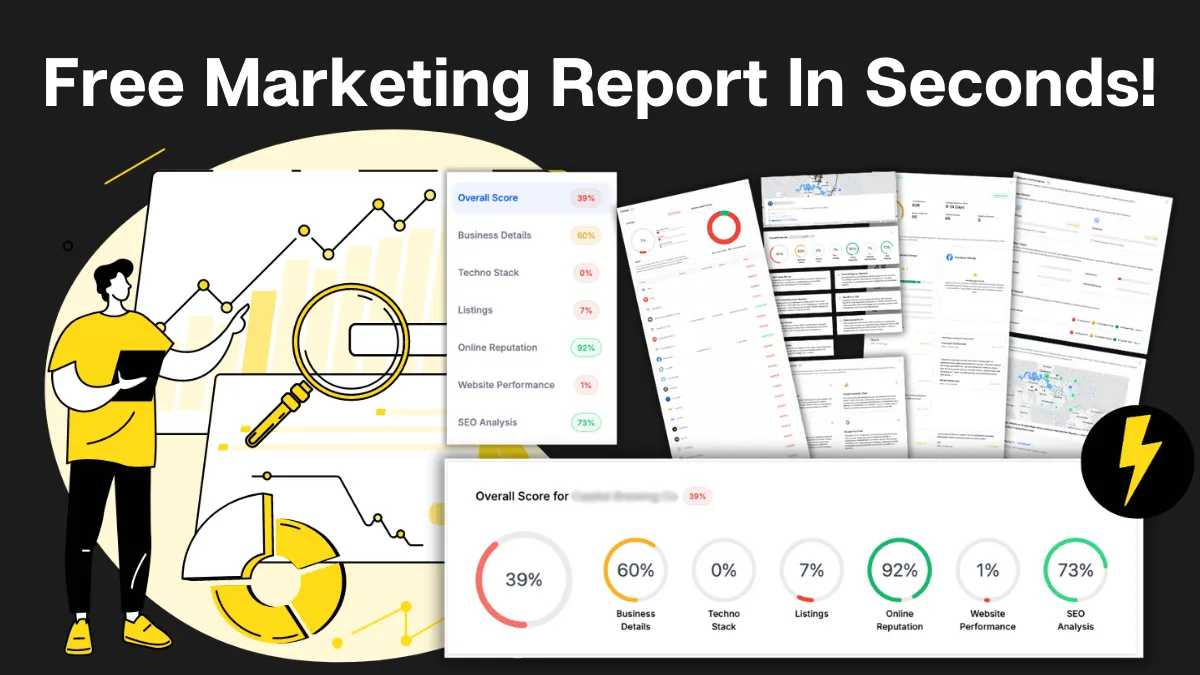
How Do You Stack Up Against the Business Down the Road?
See how you show up online next to competitors near you: reviews, listings, visibility. Free, and no homework required.
Supercharge Your Business!
Transform your business growth with our all-in-one sales and marketing software. Capture, nurture, and close more leads with ease. Don't miss out on the opportunity to streamline your operations and drive success.

See It Working Before You Talk to Anyone
Watch an enquiry get caught, answered and booked in without you glued to your phone. Your pace, no pressure.

Never miss an update from Business Booster Insights. Subscribe to our 'Level Up Newsletter' and get expert tips, strategies, and exclusive content delivered straight to your inbox. Elevate your business game today!
Your Clients Need Better Follow-Up. You Could Earn From It.
Accountants, coaches and consultants spot leaky businesses every day. Recommend the fix and earn ongoing commission.
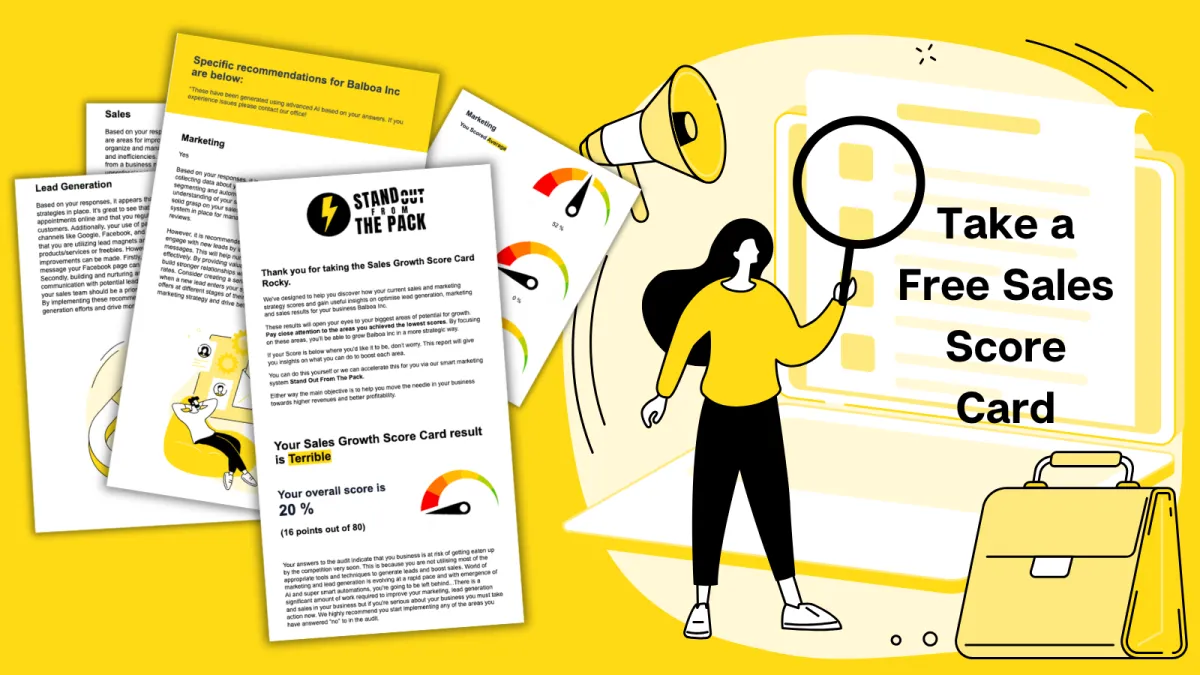
Where Are Your Enquiries Going Cold?
Answer a few quick questions and see exactly where leads slip between "just asking" and "let's book." Takes less time than your next coffee order.
Still Handing Out Cards That End Up in the Wash?
Share your details in one tap so people can save you, call you or book you on the spot. Yours free.