



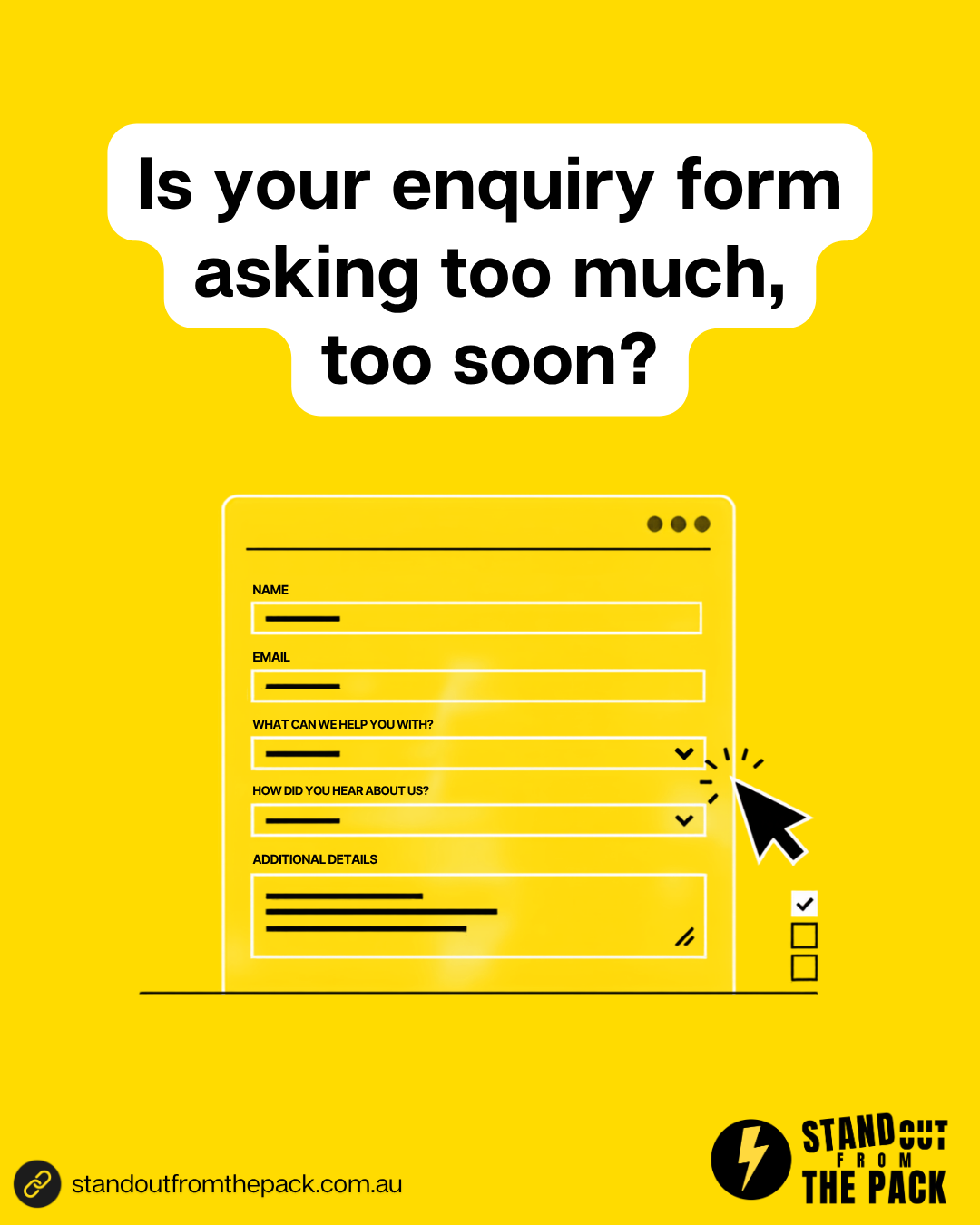
Is Your Enquiry Form Asking Too Much, Too Soon?
I keep noticing the same thing when a business owner shares their screen and says "our website just does not seem to generate many enquiries".
We open the contact page together. And there it is. The form.
Name. Email. Phone. Suburb. Postcode. Type of service. Project budget (a dropdown, starting at "under $5,000"). Preferred start date. Second preferred start date. How did you hear about us. Describe your project in detail. Have you received other quotes? Upload photos. Tick to agree to the terms and conditions.
Fourteen fields. On a phone, that is four screens of thumb scrolling, while trying to work out whether your budget is "$5,000 to $10,000" or "$10,000 to $20,000" when you honestly have no idea yet. That is the whole reason you wanted to talk to someone.
So what does the prospect do? They close the tab. They do not ring to say the form was too long. They just go to the next business on the list, the one with four fields and a button that says "Get my quote".
And the owner never sees any of it, because enquiries lost on a form are invisible. No record, no name, no missed call. Just a quiet website.
Here is the thing. The owner was not being careless. Every field was added for a good reason, usually after one bad enquiry that wasted an afternoon. The form got longer one sensible decision at a time, until it started filtering out good leads along with the bad.
Why do long enquiry forms lose good leads?
Because every question asks the prospect to do more work, before they have received anything in return.
The effort arrives before the trust. At the moment someone fills in your form, they have seen your website for maybe ninety seconds. They do not know you yet. Asking for their budget, their timeline and a detailed project history at that point is a bit like being asked for your payslips before you have seen the house.
Some questions are hard to answer. "What is your budget?" is easy for you to ask and genuinely difficult for most people to answer. Plenty of prospects stall on that one field, because they do not want to guess wrong and either look cheap or get quoted high.
Phones make every field feel longer. A form that feels reasonable on your office monitor is a small marathon on a phone screen.
The form is trying to do the whole sales process. Qualification, scoping, scheduling and pricing, all in one go. That is a conversation's job, not a form's job.
And this is why "just add a few more questions so we get better leads" so often backfires. You do get more detailed enquiries. You just get fewer of them, and the ones you lose are not necessarily the bad ones.
How do you simplify your enquiry form without lowering lead quality?
The shift is simple to say and a bit uncomfortable to do: separate what you need now from what you can collect later. The form only has to start the conversation well. The follow-up finishes the job. Six steps.
1. List every field and ask "do we need this before the first reply?" Print the form, or write the fields down. Next to each one, write "now" or "later". Now means you genuinely cannot respond usefully without it. Most businesses end up with four or five "now" fields: name, a way to contact them, what they need help with, and maybe a location or service area.
2. Replace hard questions with easy ones. If you need some sense of scope, ask a question the prospect can answer without thinking too hard. "What can we help you with?" as a short list of options beats "Describe your project in detail". A rough size (small, medium, large job) beats a budget dropdown.
3. Send an immediate acknowledgement. The moment the form is submitted, the prospect gets a message by text and email: "Thanks Sarah, we have your enquiry about a bathroom renovation. Here is what happens next." That one message tells them they are not shouting into the void, and it buys you time to respond properly.
4. Ask for the one missing detail in a follow-up. Pick the single most useful "later" field and ask for it in a short message a few minutes after the acknowledgement. "Quick one so we can point you to the right person: are you hoping to start in the next three months, or later in the year?" One question, easy reply, and people answer it far more readily than a form field, because by now there is a conversation happening.
5. Route the enquiry to the right person with the context. Based on the service and that one answer, the enquiry lands with the right team member as a task, with everything collected so far in front of them. They are not starting from a blank page and they are not asking questions the customer has already answered.
6. Qualify properly in the conversation. Budget, timing, other quotes, decision makers. All of it still gets covered, just in a call or a few messages where you can explain why you are asking.
The thread running through all six: the first step becomes easy enough to complete, and the rest of the information arrives at the point where the prospect understands why you need it.
What usually goes wrong?
The form gets shorter but nothing replaces the missing questions. Now the team gets thin enquiries and has to chase every detail by hand, which feels worse than before. The follow-up has to be built at the same time as the form gets trimmed. They are one change, not two.
The acknowledgement sounds like a robot. "Your submission has been received. Reference number 004512." Technically a reply, emotionally a closed door. Write it the way you would speak to the person if they walked into your shop.
Five follow-up questions arrive in one message. Congratulations, you have rebuilt the long form in a text message. One question per message, and only the ones that actually change what happens next.
Nobody owns the enquiry after it comes in. The form is lovely, the acknowledgement is warm, and then the enquiry sits in a shared inbox until someone notices it on Thursday. If you have made the first step easy, the next step has to be fast.
The form is changed and never measured. Compare enquiries in the month before and after the change, and how many turned into booked calls or quotes. That is the only verdict that counts.
Why is this better than the alternatives?
"We keep the long form because it filters out tyre kickers." It does filter people out. The trouble is it filters based on patience, not on fit. A busy business owner with a serious job and no time to fill in fourteen fields gets filtered out right alongside the tyre kicker. Your follow-up questions do a much better job of qualifying, because they arrive after the prospect has chosen to engage.
"We will just put our phone number on the page." Keep it there, absolutely. But lots of people do not want to call, especially after hours. A short form catches the 9pm enquirer that a phone number misses.
"We will use a booking calendar instead of a form." Brilliant for clinics and studios with standard appointments. For quotes and projects, a short form plus a fast reply usually beats asking a stranger to commit to a thirty minute slot straight away.
A short form backed by a smart follow-up gives you the best of both. More people start the conversation, and you still end up with all the information you need to qualify them properly. Just in the right order.
How does this work inside Stand Out From The Pack?
Everything above is a form, an automated acknowledgement by text and email, a follow-up message with one question, a pipeline and a task assigned to the right person. Every customer on every plan has those tools from day one. What varies is who puts them together.
- Do it yourself, with support. Every plan includes onboarding for the owner and the team, a knowledge base with 50 plus interactive guides, 24/7 live chat with real people and weekly Open Office Hours (the full list is on our support page). "Here is my fourteen field form, help me cut it to five and build the follow-up" is a very good Office Hours question.
- Get the foundations done for you. Our done-for-you account setup connects your phone number, email and forms properly, so that instant acknowledgement actually arrives from your business.
- Have us build it. The capture, instant response and qualification follow-up above are exactly what the lead systems in our Profit Roadmap are built to do. Smaller jobs, like rebuilding one form and its follow-up, sit on our services menu, and anything more particular becomes a custom project.
Whichever route you pick, the outcome is the same. More people start the conversation, and nobody on your team has to chase the basics by hand.
If you liked this one, the natural next step is following up in the way your lead actually asked you to. This article gets more people to raise their hand. That one makes sure your follow-up lands once they have.
What just happened behind the scenes of this article?
A short aside, because we should be the proof of what we preach.
Today's social post asked you to comment LEADS. Notice how little that asks of you. One word. No form, no email address, no budget dropdown. That is the shortest enquiry form we could possibly build, and it is deliberate.
When you comment, an automation picks it up, sends you a direct message within a minute with this article, and opens a conversation in our inbox with your name and the topic already attached. If you reply, one of us picks it up with the full history in front of us, and that is where the real questions happen. Easy first step, instant acknowledgement, the rest of the conversation when you are ready. Exactly the structure above.
It runs in our own account on the same platform our customers use, built the way any of them could build it, or have us build it for them.
A quick check for your own business
- Open your enquiry form on your phone. How many times do you have to scroll to reach the button?
- Which fields could you honestly not respond without?
- What does someone receive in the first sixty seconds after they submit?
- Who owns a new enquiry the moment it arrives, and how do they find out?
- Do you know how many enquiries your form produced last month, and how many turned into a quote or booking?
Frequently asked questions
How many fields should an enquiry form have? There is no magic number, but most service businesses can respond usefully with four or five: name, a contact method, what they need, and possibly location. Everything else can come in the follow-up.
Will a shorter form bring in more low quality enquiries? You may get a few more that are not a fit. The difference is you now find out in a thirty second follow-up instead of never hearing from the good ones at all. Qualification moves to the conversation, where it works better anyway.
What about the budget question? Ask it in the conversation, with a reason. "So we can recommend the right option for you" gets honest answers. A cold dropdown on a form mostly gets guesses or abandoned forms.
Want a second pair of eyes on your enquiry process? Comment LEADS on the post on Facebook or Instagram and we will take it from there.




Live, Practical, Zero Jargon
Short sessions on follow-up, systems and AI you can put to work the same afternoon. Get on the list and we'll tell you when the next one's on.
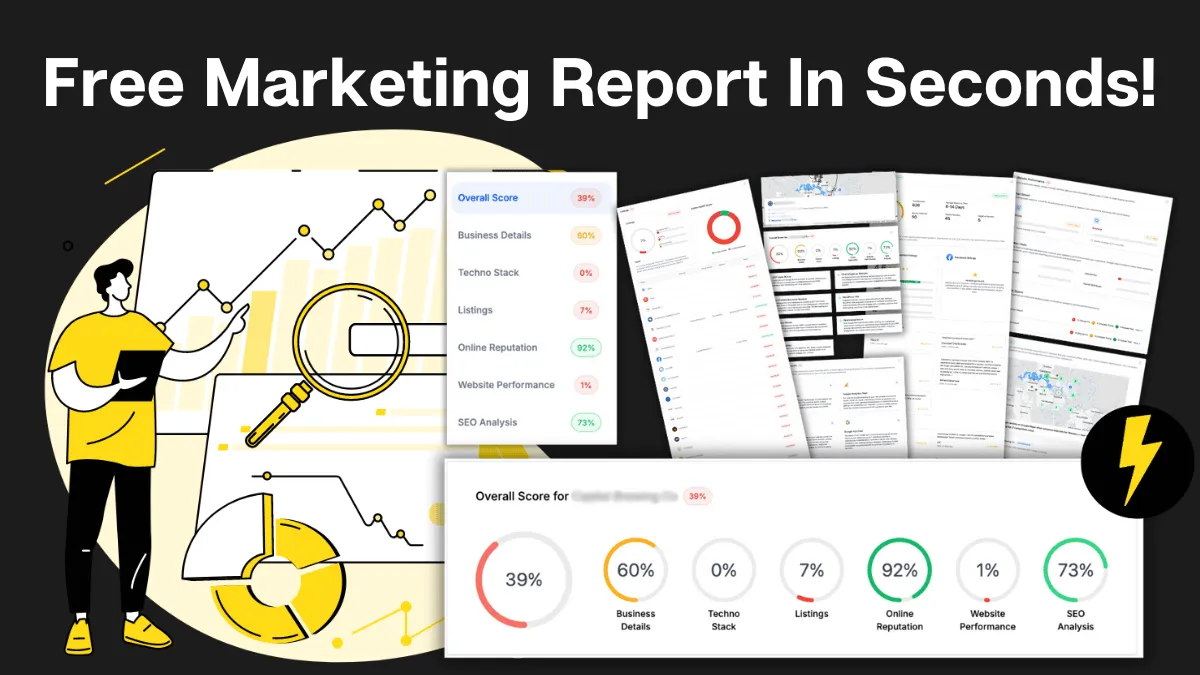
How Do You Stack Up Against the Business Down the Road?
See how you show up online next to competitors near you: reviews, listings, visibility. Free, and no homework required.

Supercharge Your Business!
Transform your business growth with our all-in-one sales and marketing software. Capture, nurture, and close more leads with ease. Don't miss out on the opportunity to streamline your operations and drive success.

See It Working Before You Talk to Anyone
Watch an enquiry get caught, answered and booked in without you glued to your phone. Your pace, no pressure.

Never miss an update from Business Booster Insights. Subscribe to our 'Level Up Newsletter' and get expert tips, strategies, and exclusive content delivered straight to your inbox. Elevate your business game today!
Your Clients Need Better Follow-Up. You Could Earn From It.
Accountants, coaches and consultants spot leaky businesses every day. Recommend the fix and earn ongoing commission.
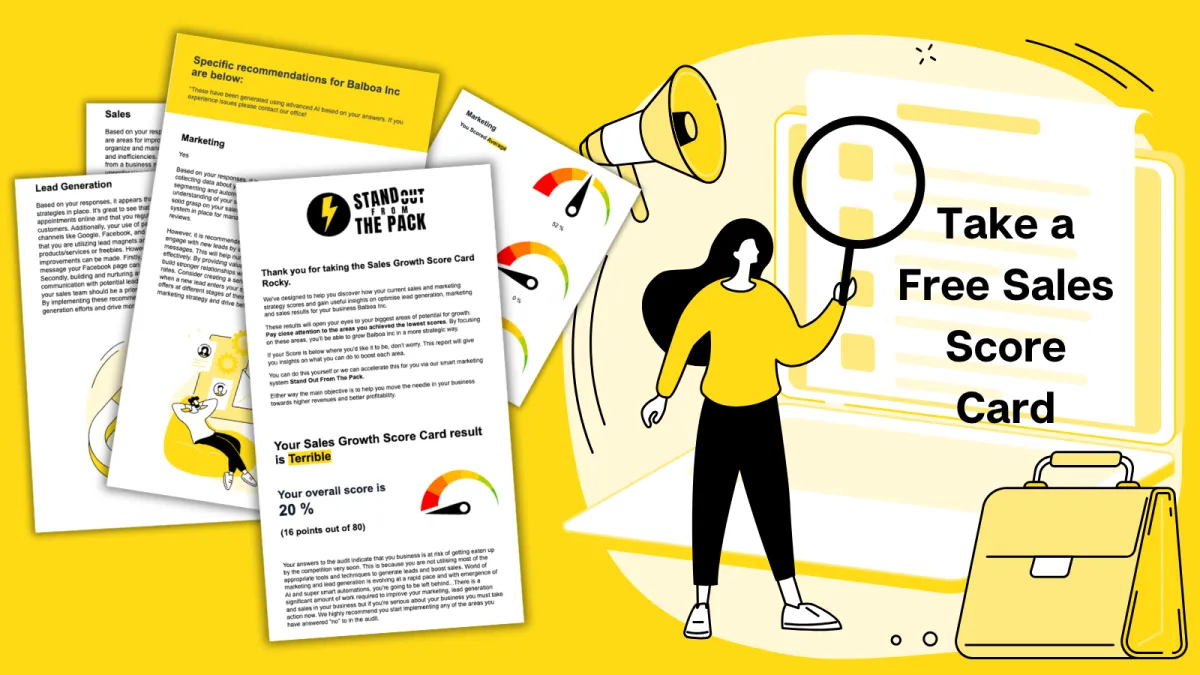
Where Are Your Enquiries Going Cold?
Answer a few quick questions and see exactly where leads slip between "just asking" and "let's book." Takes less time than your next coffee order.
Still Handing Out Cards That End Up in the Wash?
Share your details in one tap so people can save you, call you or book you on the spot. Yours free.