



They Booked. Will They Actually Turn Up?
Quick story about the most misleading word in any calendar. "Booked."
Picture a physiotherapy clinic in a busy suburban shopping strip. On a Monday, a woman with a sore shoulder books her first appointment online for Thursday the following week at 4.30pm. She gets a confirmation email straight away. Date, time, address. Lovely.
Ten days pass. Life happens.
On Thursday afternoon she remembers the appointment at 4.05, mostly by luck. She is not sure whether she needs her referral letter or her health fund card, so she grabs both. She is not sure what to wear for a shoulder assessment, so she guesses. She drives to the address, and here is where it gets interesting. The clinic sits behind the shops, the entrance is off a laneway and the car park out front belongs to the supermarket. She circles twice, calls the clinic and gets voicemail (the receptionist is checking someone in), and walks through the door at 4.43.
The physio squeezes a 45 minute assessment into 30. She leaves feeling rushed, slightly embarrassed and not at all sure she wants to come back.
And on a different Thursday, with a slightly busier day, she would have just driven home. The clinic would have marked her as a no-show and wondered why people are so unreliable.
Here is the thing. She was never unreliable. She was keen enough to book. The journey just stopped at the confirmation email.
Why do booked customers still miss appointments?
Because a booking is a moment of intent, and intent fades. Everything that happens between the booking and the appointment either protects that intent or quietly lets it leak away.
The gap is longer than you think. Same day bookings rarely go missing. It is the appointment booked a week or two out that gets forgotten, double booked with a school pick-up or pushed aside by a busy week.
Uncertainty creates hesitation. What should I bring? How long will it take? Where do I park? Will it hurt? What does it cost? Every unanswered question is a small reason to put it off, and a few small reasons add up to "maybe next week".
Life changes, and rescheduling feels awkward. When something comes up, many people would rather not show than ring a business and explain. If changing the time means a phone call during business hours, the easy option is silence.
One confirmation is expected to do everything. It gets read once, if at all, and then buried under a week of other emails.
And this is why no-shows are mostly a journey problem, not a customer problem. The customer did their part. The days in between were simply left empty.
How do you build a pre-appointment journey that gets people through the door?
Think of the days between booking and attendance as their own short journey, with a job for each step. Six steps.
1. Send a confirmation that answers the first questions. Not just date, time and address. Add what the appointment involves, how long it takes, what it costs (or what is covered) and who they will see. A friendly line like "You are booked with Sam, our senior physio. Your first visit takes about 45 minutes" makes it feel real.
2. Send preparation details a few days before. What to bring, what to wear, any forms to complete beforehand. A short form they can fill in at home saves ten minutes in the waiting room and gets them mentally invested before they arrive.
3. Remind them at the right times. For most businesses, a reminder the day before and another a couple of hours before works well. Keep each reminder short and specific: "See you tomorrow at 4.30pm with Sam."
4. Give clear directions, parking included. Tell them exactly how to find you, especially if it is not obvious. "Our entrance is off the laneway behind the bakery. Free parking in the two hour bays on Smith Street." One sentence like that saves a lot of circling.
5. Make confirming or rescheduling one tap. Ask them to reply YES to confirm, and give them a link to move their time if something has come up. A reschedule is a win. It keeps the customer, frees the slot for someone else and saves your team from a surprise gap in the diary.
6. Add a little reassurance. First visits can be nerve-racking. A short note that says what will happen, that questions are welcome and that they are in good hands goes a long way, especially in health, finance, legal and anything else where people feel exposed.
The thread through all six: you are not nagging. You are removing every small reason not to come.
What usually goes wrong?
Too many messages. Six texts in a week feels like pressure, not care. Combine where you can. The confirmation and the preparation details can be one message for a booking two days out, and the reminders can stay short.
The same journey for every booking. A same day booking does not need a preparation message three days before. Set the journey to adjust based on how far away the appointment is, so nobody gets a "see you in three days" text an hour before they arrive.
Rescheduling is technically possible but hidden. If the reschedule link is buried in the footer, or leads to a page that says "please call us", customers will skip it and simply not turn up. Put it right in the reminder, in plain words.
Nobody acts on the replies. If a customer replies "running late" or "can I change to Friday?" and that message sits unread, the journey has just taught them that replying is pointless. Make sure replies land somewhere a person sees them quickly.
Treating every miss as a lost cause. Even with a great journey, some people will miss. A kind "we missed you today, would you like to rebook?" message on the same day recovers more of them than you would expect.
Why is this better than the alternatives?
"We call everyone the day before." That works, if you have the time and they pick up. A friendly automated journey does the routine reminding for you, and your team can save their calls for the people who have not confirmed.
"We charge a no-show fee." A fee can be fair, and plenty of businesses need one. But it only deals with the miss after it happens, and it often costs you the customer as well. Preventing the miss is better for everyone.
"People are adults, they should remember." They are, and most of them do. Between us though, every one of us has forgotten something we genuinely meant to do. A good journey is simply a polite way of being on their side.
The payoff: more bookings turning into attended appointments, fewer gaps in the diary, customers who arrive prepared and relaxed, and a front desk that is not chasing people by phone all afternoon. If someone does need to cancel, our piece on making it easy for cancelled customers to rebook picks up exactly where this journey leaves off.
How does this work inside Stand Out From The Pack?
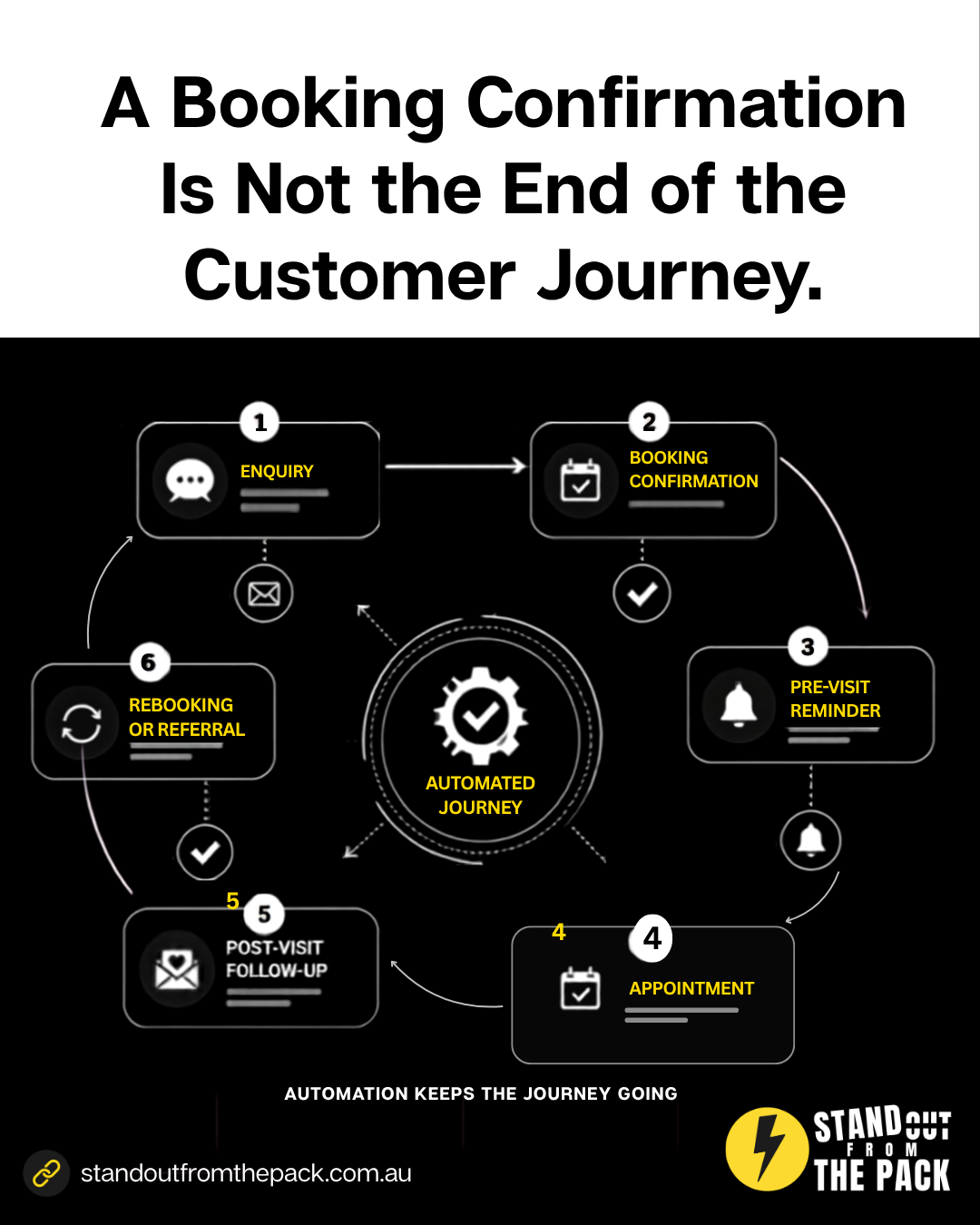
Everything above can be built with tools that are already in your account: online booking calendars with automatic confirmations, email and text reminders timed around each appointment, forms the customer can complete before they arrive, confirm and reschedule links, one inbox where replies like "running late" land for the team, and an automation for a same day "we missed you" message. Every customer on every plan has those tools from day one. The only question is who sets them up.
- Do it yourself, with support. Every plan includes onboarding for the owner and the team, a knowledge base with 50 plus interactive guides, 24/7 live chat with real people and weekly Open Office Hours (all on our support page). Bring your current confirmation message to Office Hours and we will help you map the rest of the journey around it, live.
- Get the foundations done for you. Our done-for-you account setup connects your phone number, email and inbox properly, so reminders actually reach people and their replies come back to one place.
- Have us build it. Booking and attendance journeys are part of our Profit Roadmap. A single job like "set up reminders and a reschedule link for our first appointments" sits on our services menu, and a full journey across several appointment types becomes a custom project.
And if your diary is often too full for new customers to find a time at all, our piece on booking options when no times suit is worth a read before you add more reminders.
What just happened behind the scenes of this article?
A small example of closing the gap between intent and action.
Today's social post asked you to comment JOURNEY. When you did, an automation picked up the comment and, within a minute, Alfie (Vit's AI sidekick) sent you a direct message with this article.
The timing is the point. If you had to wait until Monday for someone to get back to you, the moment of interest would have passed and the article would have been one more thing to remember. Sending it within a minute, while you are still curious, does the same job as a good reminder: it makes following through the easy option.
It all runs in our own account on the same platform our customers use, built the way any of them could build it, or have us build it for them.
A quick check for your own business
- Does your booking confirmation explain what the appointment involves and how long it takes?
- Do customers know what to bring and how to prepare before they arrive?
- Would a first-time customer find your entrance and parking without calling?
- Can a customer confirm or reschedule in one tap, without phoning during business hours?
- When someone misses an appointment, does anyone reach out the same day?
Frequently asked questions
How many reminders should we send? For most appointment-based businesses, two is plenty: one the day before and one a couple of hours before. Add a preparation message only if the booking is several days out or the first visit needs something from the customer.
Should reminders go by email or text? Both have a place. Email suits the confirmation and preparation details, because people may want to refer back to them. Text suits the short reminders close to the appointment, because it is seen quickly.
Will a reschedule link encourage people to cancel? Rarely. People who need to change their time will do it anyway, by not turning up. A reschedule link turns that silent miss into a new booking and an open slot you can fill.
Does this work for consultations as well as appointments? Yes. Accountants, brokers, coaches and advisors all lose first meetings in the same gap. The same steps apply: confirm, prepare, remind, give directions or a meeting link, and make changing the time easy.
Want to map the steps between enquiry, booking and attendance in your business? Comment JOURNEY on the post on Facebook or Instagram and we will take it from there.




Live, Practical, Zero Jargon
Short sessions on follow-up, systems and AI you can put to work the same afternoon. Get on the list and we'll tell you when the next one's on.
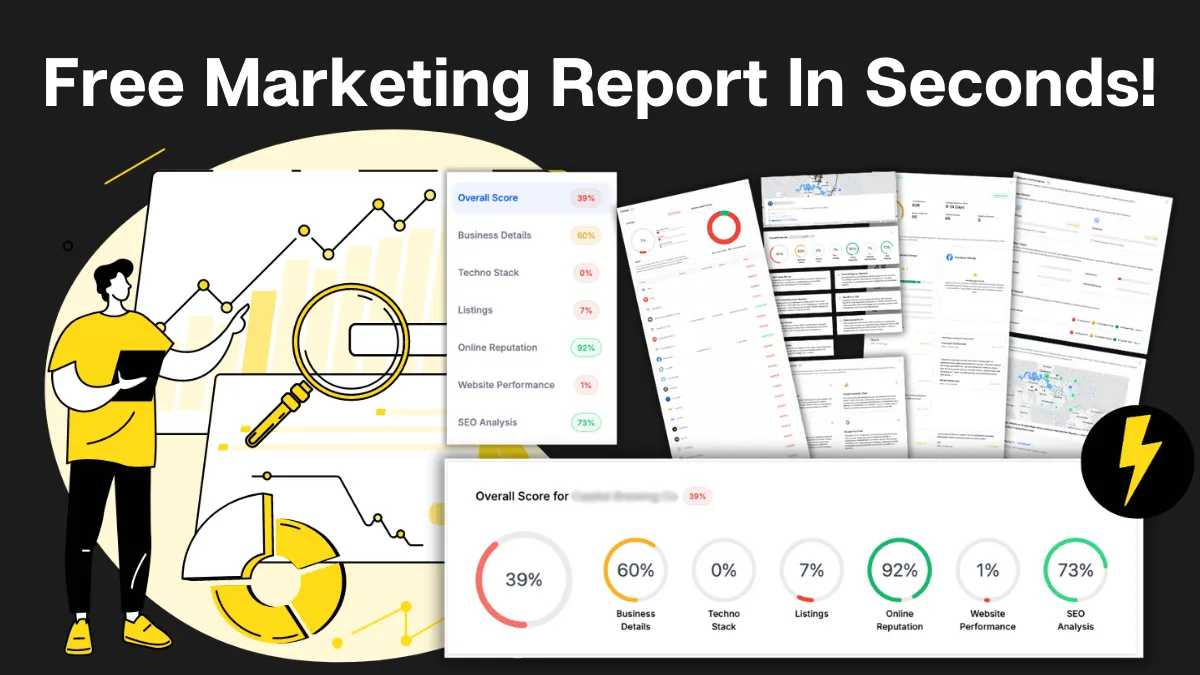
How Do You Stack Up Against the Business Down the Road?
See how you show up online next to competitors near you: reviews, listings, visibility. Free, and no homework required.

Supercharge Your Business!
Transform your business growth with our all-in-one sales and marketing software. Capture, nurture, and close more leads with ease. Don't miss out on the opportunity to streamline your operations and drive success.

See It Working Before You Talk to Anyone
Watch an enquiry get caught, answered and booked in without you glued to your phone. Your pace, no pressure.

Never miss an update from Business Booster Insights. Subscribe to our 'Level Up Newsletter' and get expert tips, strategies, and exclusive content delivered straight to your inbox. Elevate your business game today!

Your Clients Need Better Follow-Up. You Could Earn From It.
Accountants, coaches and consultants spot leaky businesses every day. Recommend the fix and earn ongoing commission.

Where Are Your Enquiries Going Cold?
Answer a few quick questions and see exactly where leads slip between "just asking" and "let's book." Takes less time than your next coffee order.
Still Handing Out Cards That End Up in the Wash?
Share your details in one tap so people can save you, call you or book you on the spot. Yours free.