


Your Reply Was Polite. Did It Give Your Lead a Next Step?
You know the feeling. You send a quick, friendly reply to a new enquiry, you feel good about how fast you were, and then.. nothing. No reply. No booking. The lead just fades.
Picture a solar and battery installer with a small office team of three. On a Tuesday evening, a homeowner fills in the website form: "We have a four bedroom house, already have 6.6kW of panels, thinking about a battery. Roughly what would it cost and is it worth it for us?"
The office manager sees it at 8.15 the next morning and replies within ten minutes. Here is what she sends:
"Hi Sarah, thanks for contacting us! How can we help? Kind regards, the team."
Sarah reads it on her phone between school drop-off and work. She already told them how they could help. She asked about a battery, for her house, with her panels. Now she has to write it all again, and she has no idea what happens after that. So she does what most of us do with a message that asks us to start over. She leaves it for later.
Later never comes. On Friday, a competitor replies to the same enquiry with three lines: what a battery like that usually costs for a home her size, one question about her power bills, and a link to book a 15 minute call. Sarah books it that afternoon.
Here is the thing. The first business was faster. It just was not more useful.
Why do polite replies lose good enquiries?
Because a reply can be quick, friendly and completely empty at the same time. And the lead notices.
It ignores what they already said. When someone writes a detailed enquiry and gets back "How can we help?", the message they hear is "we did not read it".
It puts all the effort back on the prospect. Every reply that ends in an open question gives the lead homework. Busy people put homework off, and good leads are often the busiest people.
It offers too many options, or none. "Feel free to call, email, book online or drop in" sounds generous. In practice, four choices with no clear recommendation means no choice gets made.
It does not explain what happens next. Most people hesitate because they do not know what they are signing up for. Silence fills that gap with doubt.
And this is why "we always reply quickly" is not the same as "we follow up well". A reply is only follow-up if it moves the conversation forward.
What should a good enquiry reply include?
Think of every first reply as having one job: make the next step feel easy. Six steps get you there.
1. Confirm you understood the request. Start by playing back what they asked, in a sentence. "Thanks Sarah, so you are looking at adding a battery to your existing 6.6kW system for a four bedroom home." That one line tells them a real person read it, and it quietly corrects anything you might have misread.
2. Answer the immediate concern, even partly. People usually enquire with one burning question: price, timing, availability or "can you even do this?" Give them something real, even if it is a range or a "usually". "For a home like yours, here is the price range we usually see installed, and the two things that move it most: the battery size and your switchboard." (With your real range in it, of course.) A rough answer beats no answer every time.
3. Ask one useful question. Not five. One. "Roughly what is your quarterly power bill at the moment?" is a brilliant question. "Can you tell us more about your needs?" is not.
4. Offer one clear next step. Recommend a single action and make it easy. A link to book a short call, a choice of two times, a request for a photo of the switchboard. If you want to offer an alternative, add it as a backup, not as an equal option: "If a call does not suit, just reply here and we will keep going by text."
5. Say what happens after that. One sentence on what the next step involves. "The call takes 15 minutes, we will look at your bills together and you will have a written estimate by the end of the week." Now the lead knows exactly what they are agreeing to, and saying yes feels small.
6. Turn it into a template your team can adapt. Write a short reply for each of your most common enquiry types, with the playback, the answer range, the one question and the next step already in place. The team fills in the details.
The thread through all of it: a good reply does more work for the lead than the lead has to do for you.
What usually goes wrong?
The template is so generic it could be from anyone. If the reply works for every enquiry, it helps none of them. Make sure the playback line actually uses their words, even if the rest is templated.
Asking for everything at once. Address, budget, timeframe, how they heard about you, photos, preferred contact time. That is a form, not a reply. Ask one thing now and collect the rest during the next step.
Refusing to mention price. Plenty of businesses worry that a range will scare people off. Usually the opposite happens. A rough range filters out the poor fits and gives the good fits the confidence to keep talking.
The booking link goes somewhere awkward. If the next step is "book a call" and the calendar shows nothing for two weeks, you have just created a new reason to stall. Check that the step you are offering is actually available.
Nobody follows up the follow-up. Even a great reply gets missed sometimes. If there is no response in a day or two, a short, friendly nudge that repeats the one next step catches a surprising number of leads who simply forgot.
Why is this better than the alternatives?
"We will just call them instead." Calling is great, when people answer. A clear written reply works whenever they are ready to read it, and you can still offer a call as the next step.
"We keep it short so we do not overwhelm them." Short is good. Empty is not. The best replies are often only four or five lines long.
"Our auto-reply already says thanks." An instant acknowledgement is brilliant, and you should keep it. But "we have your message and will be in touch" is a receipt, not a reply. The human (or well built) response that follows still needs to move things forward. Trust me on that one.
The payoff: more enquiries turning into booked calls, quotes and site visits, fewer conversations that stall after one message, and a team that never has to wonder what to write. A few weeks ago we wrote about the thank-you page that keeps enquiries moving. The reply is the very next moment in that same journey, so it deserves the same care.
How does this work inside Stand Out From The Pack?
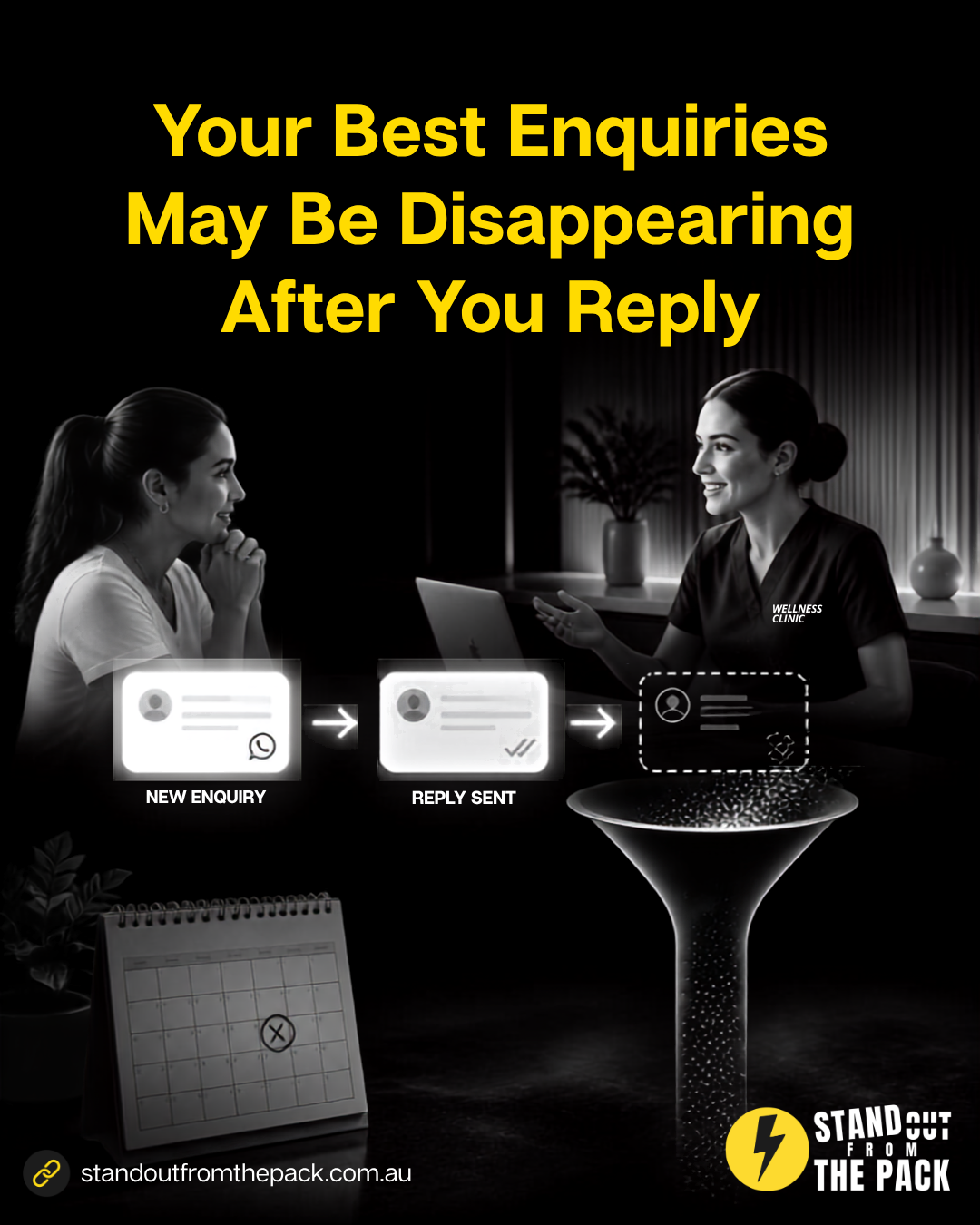
Everything above can be built with tools that are already in your account: one inbox where every enquiry lands whether it came by form, text, email or social message, saved reply templates for each enquiry type, an online calendar link you can drop into any message, an instant acknowledgement for new enquiries, and an automation that reminds the team (or nudges the lead) when a conversation has gone quiet for a day or two. Every customer on every plan has those tools from day one. The only question is who sets them up.
- Do it yourself, with support. Every plan includes onboarding for the owner and the team, a knowledge base with 50 plus interactive guides, 24/7 live chat with real people and weekly Open Office Hours (all on our support page). Bring three of your recent enquiry replies to Office Hours and we will help you rework them, live.
- Get the foundations done for you. Our done-for-you account setup connects your phone number, email and inbox properly, so every enquiry lands in one place and your replies go out from the right number and address.
- Have us build it. Lead capture and follow-up systems are part of our Profit Roadmap. A single job like "write reply templates and a two day nudge for our main enquiry types" sits on our services menu, and a full enquiry journey across several services becomes a custom project.
If your enquiries tend to arrive vague in the first place, our piece on letting customers describe what they need in their own words pairs nicely with this one.
What just happened behind the scenes of this article?
You were on the receiving end of today's topic, actually.
Today's social post asked you to comment LEADS. When you did, an automation picked up the comment and, within a minute, Alfie (Vit's AI sidekick) sent you a direct message with this article.
Notice what that message did not do. It did not reply "Thanks for your comment! How can we help?" You had already told us what you wanted by commenting the keyword, so the message skipped the homework and sent the thing you asked for. One request, one useful reply, one clear next step: read the article.
It all runs in our own account on the same platform our customers use, built the way any of them could build it, or have us build it for them.
A quick check for your own business
- Does your first reply to an enquiry play back what the person actually asked?
- Do you give a real answer to their main question, even if it is a range?
- Do you ask one useful question, rather than several or none?
- Does every reply end with one clear, easy next step?
- If a lead goes quiet after your reply, does anyone follow up within two days?
Frequently asked questions
How quickly should we reply to a new enquiry? As fast as you reasonably can, ideally within the hour during business hours. But speed only helps if the reply is useful. A thoughtful reply in 30 minutes beats an empty one in three.
Should we include pricing in the first reply? Where you can, yes, as a range with a short note about what moves it. If pricing truly depends on an assessment, explain what the assessment involves and how quickly they will get a number.
What if the enquiry is too vague to answer? Then the one useful question is your answer. Choose the question that will tell you the most, and make it easy to reply to, e.g. "Is this for your home or a business?"
Can AI write these replies for us? It can help draft them, especially the playback line and the useful question. Just keep a person in the loop for anything urgent, sensitive or high value, and make sure every reply still ends with one clear next step.
Want to find out where your enquiries slip away after the first reply? Comment LEADS on the post on Facebook or Instagram and we will take it from there.



Live, Practical, Zero Jargon
Short sessions on follow-up, systems and AI you can put to work the same afternoon. Get on the list and we'll tell you when the next one's on.
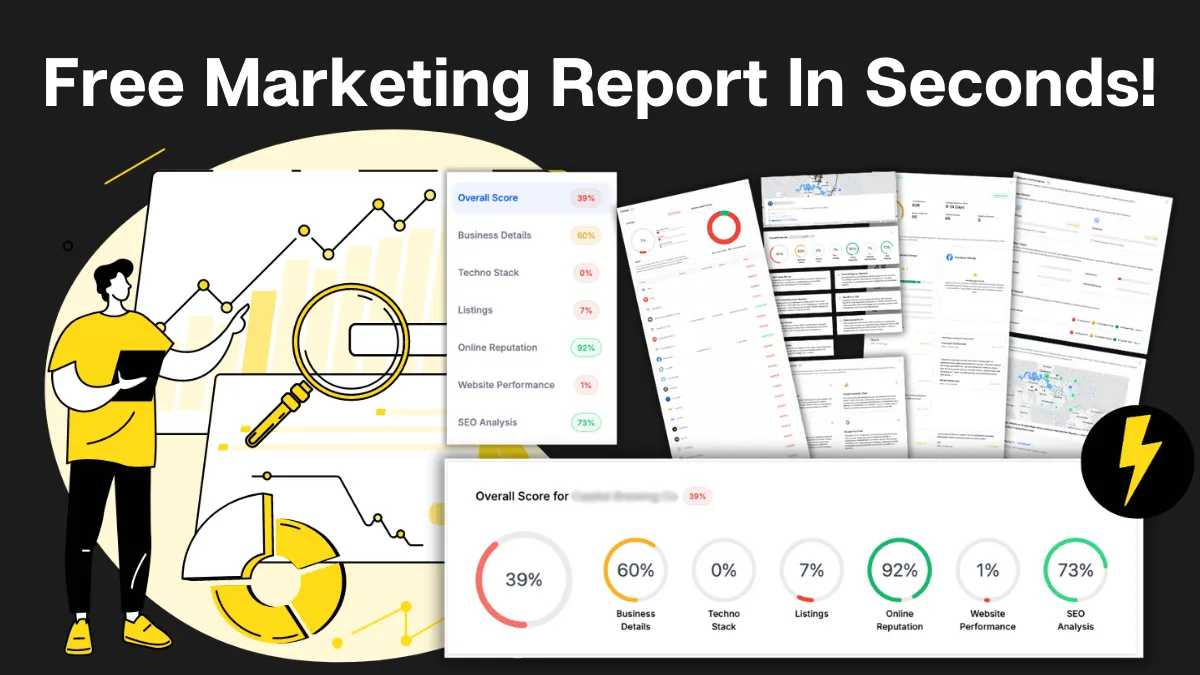
How Do You Stack Up Against the Business Down the Road?
See how you show up online next to competitors near you: reviews, listings, visibility. Free, and no homework required.

Supercharge Your Business!
Transform your business growth with our all-in-one sales and marketing software. Capture, nurture, and close more leads with ease. Don't miss out on the opportunity to streamline your operations and drive success.

See It Working Before You Talk to Anyone
Watch an enquiry get caught, answered and booked in without you glued to your phone. Your pace, no pressure.

Never miss an update from Business Booster Insights. Subscribe to our 'Level Up Newsletter' and get expert tips, strategies, and exclusive content delivered straight to your inbox. Elevate your business game today!
Your Clients Need Better Follow-Up. You Could Earn From It.
Accountants, coaches and consultants spot leaky businesses every day. Recommend the fix and earn ongoing commission.
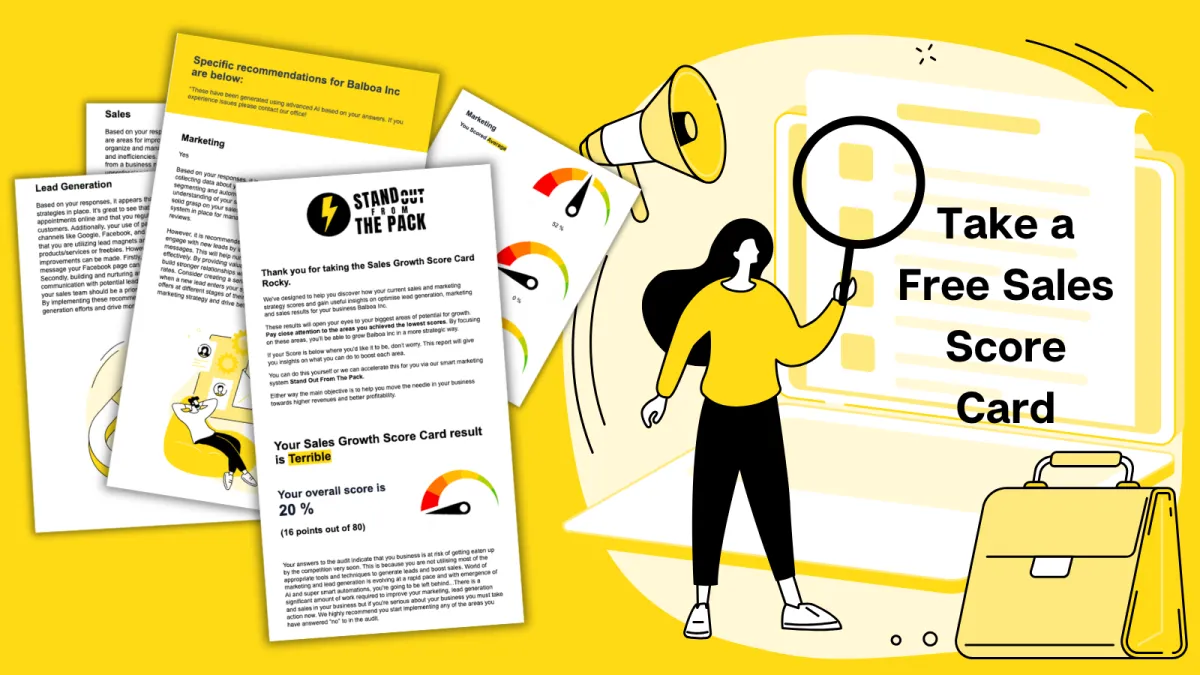
Where Are Your Enquiries Going Cold?
Answer a few quick questions and see exactly where leads slip between "just asking" and "let's book." Takes less time than your next coffee order.
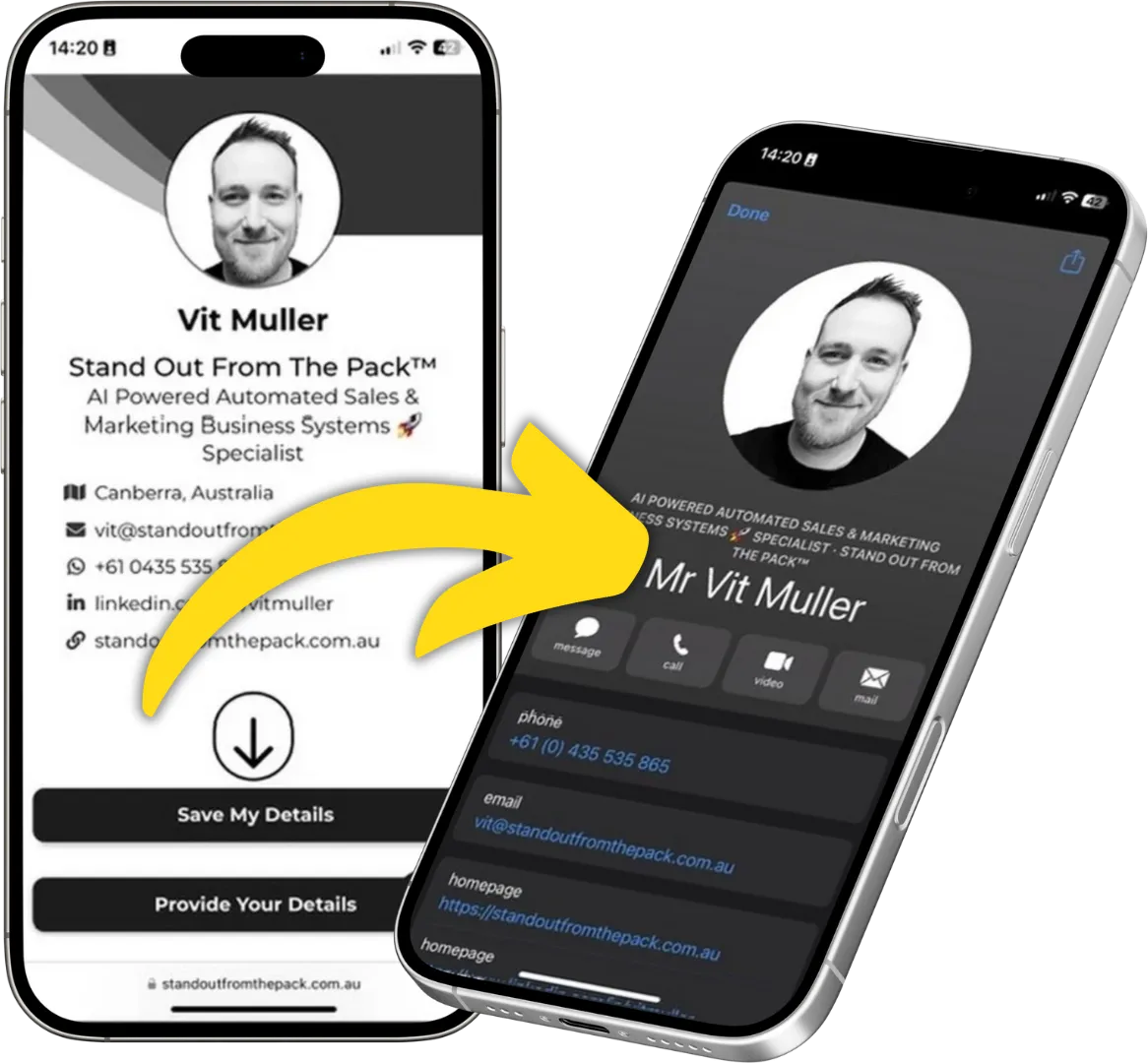
Still Handing Out Cards That End Up in the Wash?
Share your details in one tap so people can save you, call you or book you on the spot. Yours free.