


Your Customer Asked for One Small Change. Who Agreed to the Price?
Quick story about the most expensive sentence in any project. It is not "here is the quote". It is "oh, while you are here.."
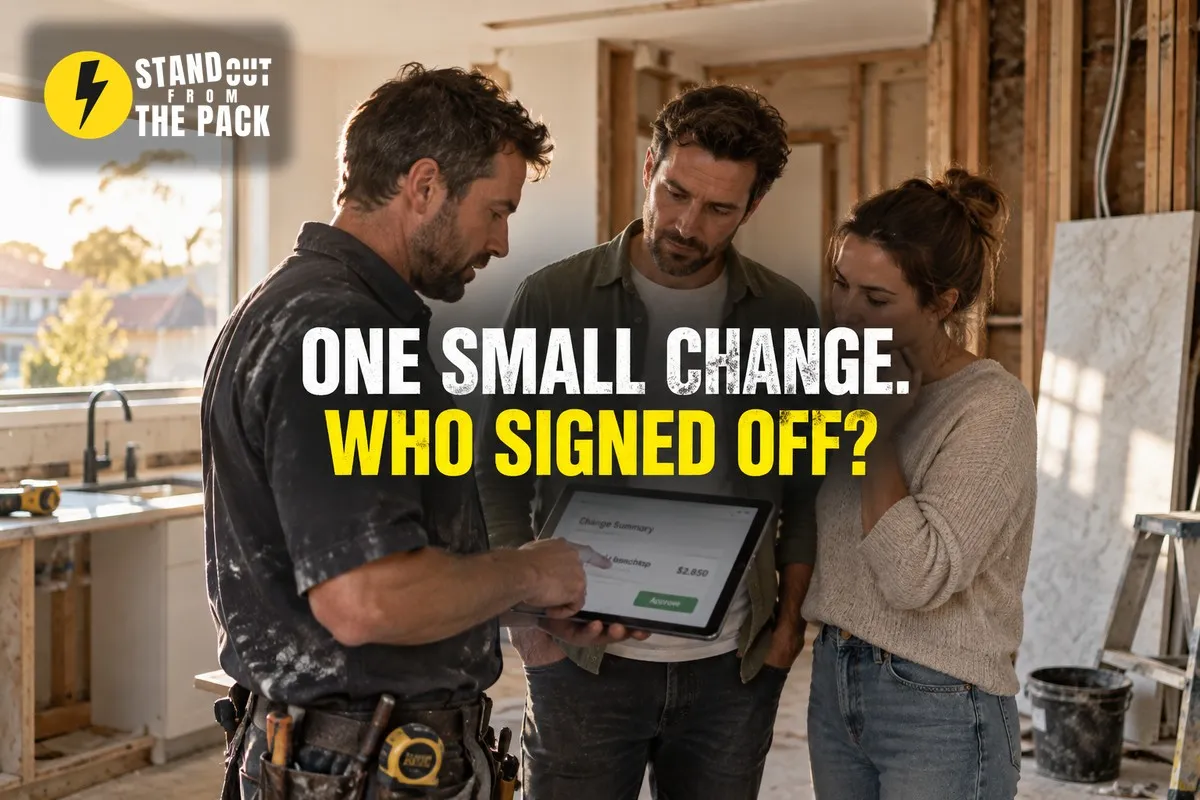
Picture a small renovation business doing a bathroom and laundry for a young family. Fixed quote, six week schedule, everyone happy. In week two, the homeowner wanders in while the tiler is setting out and says, "While you are here, could we move the niche a bit higher? And maybe do the floor tiles all the way into the laundry?" The tiler says "Yeah, no worries", because he is a nice bloke and it seems simple enough.
In week three, the owner of the business notices the extra tiles on the supplier invoice. In week four, the plumber needs to move a waste pipe to suit the new layout. In week five, the job runs three days over because the laundry floor needed levelling first.
Then the final invoice arrives with a line that says "Variations: $2,850".
The homeowner is genuinely shocked. In her mind, she asked a small favour and the tiler said no worries. In the business owner's mind, it was obviously extra work and obviously chargeable. Both of them feel slightly taken advantage of, and a lovely job ends with a tense phone call and a three star review.
Nobody lied. Nobody was greedy. The change just happened in a hallway conversation, and nobody ever confirmed what it meant.
And here is the thing. Changes are completely normal. Surprises are what damage trust.
Why do project changes cause so much friction?
Because the change itself is agreed in seconds, and the consequences show up weeks later, usually on an invoice.
Changes happen in passing. On site, on the phone, at the end of a meeting, in a text to whoever the customer happens to have the number for. They rarely happen in a place where anyone writes them down.
The person agreeing is not the person pricing. The tiler, the junior designer or the bookkeeper wants to be helpful. They say yes to the request without knowing (or being able to say) what it costs or how it moves the timeline.
"Small" means different things to each side. To the customer, moving a niche is ten centimetres. To the business, it might mean a different waterproofing layout, extra labour and a plumbing visit. Neither view is wrong. They just never got compared.
Nobody confirms the impact before work continues. So the change sits in limbo. It is agreed in principle, not priced, not approved, and already being built.
And this is why the argument always happens at the end. Every day between the conversation and the invoice, the two sides drift a little further apart in what they remember.
How do you manage changes without the awkward conversations?
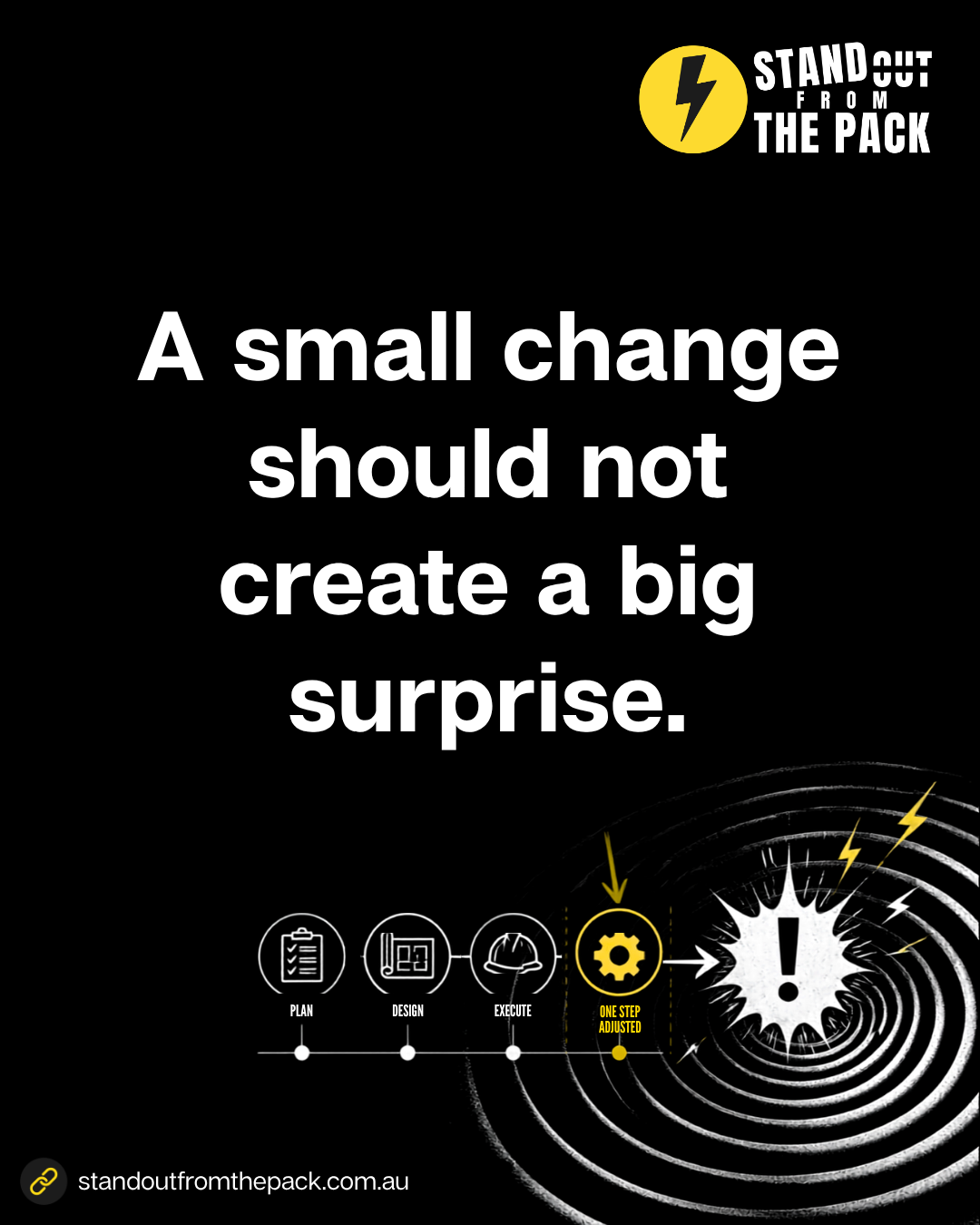
Give changes their own simple journey, separate from the main project. Six steps.
1. Explain how changes work before the project starts. In your welcome message or proposal, add a short paragraph: changes are normal, here is how to request one, we will confirm the price and timing before we do the work, and nothing extra gets built until you approve it. Customers love this, because it tells them asking is safe.
2. Capture every request in one place. Whether it comes in on site, by phone or by text, it goes into the job record. A quick form the team can fill in from their phone works well: what was asked, who asked, when. The rule for the team is simple and kind: "Great idea, I will get that confirmed for you", never "yeah, no worries".
3. Confirm the impact in writing. Within a day or two, send the customer a short change summary. What is changing, whether it affects the price, whether it affects the timeline, and anything else it touches. For the bathroom, that is three lines: niche moved, floor extended into laundry, $2,850 and three extra days.
4. Get a clear approval before work continues. The customer approves the change with a reply, a click or a signature. Until then, the change is on hold and the original plan continues. This is the step that turns "I thought it was included" into "I approved that on the 14th".
5. Update the plan everyone works from. Once approved, the scope, price, timeline and responsibilities are updated in the job record, so the team, the trades and the customer all see the same version. No one is working from the original quote while someone else works from a text message.
6. Reflect the change in the final invoice without surprises. When the invoice arrives, the variation line should match an approval the customer remembers giving. It should feel like confirmation, not discovery.
The thread through all six: a change is not agreed when someone says yes. It is agreed when both sides have seen the impact and said yes to that.
What usually goes wrong?
The team keeps saying "no worries" on site. Old habits win unless the replacement phrase is easy. Give everyone the same friendly line and make the change form quicker than a phone call to the office.
The change summary turns into a contract negotiation. If every small change needs a three page document, people will avoid the process. Keep it to a few lines and a simple approve button for most changes.
Waiting too long to confirm. If the summary arrives two weeks later, the work is probably already done. Aim to confirm within a day or two, before anything gets built.
Not tracking the "no charge" changes. Sometimes you will happily absorb a small change. Record it anyway, marked as no charge. It shows the customer the goodwill and stops it becoming an expectation for the next five requests.
Forgetting the timeline. Customers often accept a price change easily and get upset about a delay they did not see coming. Always say what happens to the finish date, even if the answer is "no change".
Why is this better than the alternatives?
"We just sort it out at the end." That is exactly when everyone remembers things differently. Sorting it out at the end means negotiating with a customer who already feels surprised.
"We only charge for big changes." Then who decides what counts as big? Usually the business, after the fact. Recording every change, including the free ones, removes the guesswork for both sides.
"Our customers trust us." They do, and that is exactly what you are protecting. Between us, there is nothing that erodes trust faster than a number on an invoice the customer did not expect.
The payoff: fewer disputes, invoices that get paid without a phone call, a team that knows exactly what to say when a customer asks for "one small thing", and projects that still finish feeling like a good experience. Last week we wrote about how to finish a project so both sides agree it is done. A clear change process is what makes that ending possible.
How does this work inside Stand Out From The Pack?
Everything above can be built from a form your team fills in from their phone, a "change requested" stage or tag on the job, a message template for the change summary, an estimate or simple document the customer can approve online, and an automation that tells the team when the approval comes back. Every customer on every plan has those tools from day one. The only question is who sets them up.
- Do it yourself, with support. Every plan includes onboarding for the owner and the team, a knowledge base with 50 plus interactive guides, 24/7 live chat with real people and weekly Open Office Hours (all on our support page). Bring your current "how we handle variations" process to Office Hours and we will help you map it, live.
- Get the foundations done for you. Our done-for-you account setup connects your phone number, email and inbox properly, so change summaries reach the customer and their approvals come back to one place.
- Have us build it. Customer journey systems are part of our Profit Roadmap. A single job like "add a change request form and approval step" sits on our services menu, and a full delivery process across several job types becomes a custom project.
If your customers also tend to go quiet in the middle of a job, our piece on proactive updates while customers wait covers that stretch of the journey.
What just happened behind the scenes of this article?
Two small things, one of them very on topic.
Today's social post asked you to comment JOURNEY. When you did, an automation picked up the comment and, within a minute, Alfie (Vit's AI sidekick) sent you a direct message with this article. Same pattern every time: comment, message, article.
The on topic bit: this article went through its own little change process before you read it. Any edit is requested in one place, applied to one master copy and then republished from there. Nobody quietly patches the live page on the side, because the next update would overwrite it and nobody would know which version was right. One request, one record, one version. Sound familiar?
It all runs in our own account on the same platform our customers use, built the way any of them could build it, or have us build it for them.
A quick check for your own business
- Do customers know how to request a change before the project starts?
- Does every change request end up in the job record, no matter where it was made?
- Does your team have a friendly alternative to "yeah, no worries"?
- Do customers approve the price and timing of a change before the work is done?
- Would every variation on your last final invoice match an approval the customer remembers?
Frequently asked questions
Do we really need approval for tiny changes? For genuinely tiny ones, a quick written confirmation is enough, even "no charge, no change to timing". The point is that both sides have the same record, not that every change needs paperwork.
What if the customer will not approve the change? Then the original plan continues. That is a perfectly good outcome, because it was decided before any extra work was done rather than argued about afterwards.
How quickly should we send the change summary? Ideally within one or two business days, and always before the change is built. The longer the gap, the more the conversation turns into a negotiation.
Does this work for service businesses, not just trades? Yes. Accountants, designers, consultants and coaches all deal with scope changes. The steps are the same: capture the request, confirm the impact, get approval, update the plan.
Want to see how a clearer change process could work in your business? Comment JOURNEY on the post on Facebook or Instagram and we will take it from there.




Live, Practical, Zero Jargon
Short sessions on follow-up, systems and AI you can put to work the same afternoon. Get on the list and we'll tell you when the next one's on.

How Do You Stack Up Against the Business Down the Road?
See how you show up online next to competitors near you: reviews, listings, visibility. Free, and no homework required.

Supercharge Your Business!
Transform your business growth with our all-in-one sales and marketing software. Capture, nurture, and close more leads with ease. Don't miss out on the opportunity to streamline your operations and drive success.

See It Working Before You Talk to Anyone
Watch an enquiry get caught, answered and booked in without you glued to your phone. Your pace, no pressure.

Never miss an update from Business Booster Insights. Subscribe to our 'Level Up Newsletter' and get expert tips, strategies, and exclusive content delivered straight to your inbox. Elevate your business game today!

Your Clients Need Better Follow-Up. You Could Earn From It.
Accountants, coaches and consultants spot leaky businesses every day. Recommend the fix and earn ongoing commission.

Where Are Your Enquiries Going Cold?
Answer a few quick questions and see exactly where leads slip between "just asking" and "let's book." Takes less time than your next coffee order.
Still Handing Out Cards That End Up in the Wash?
Share your details in one tap so people can save you, call you or book you on the spot. Yours free.