


Your Lead Never Got Your Reply. Would You Even Know?
I keep noticing a particular kind of lost lead. Not the one who went quiet. The one who never actually heard from you.
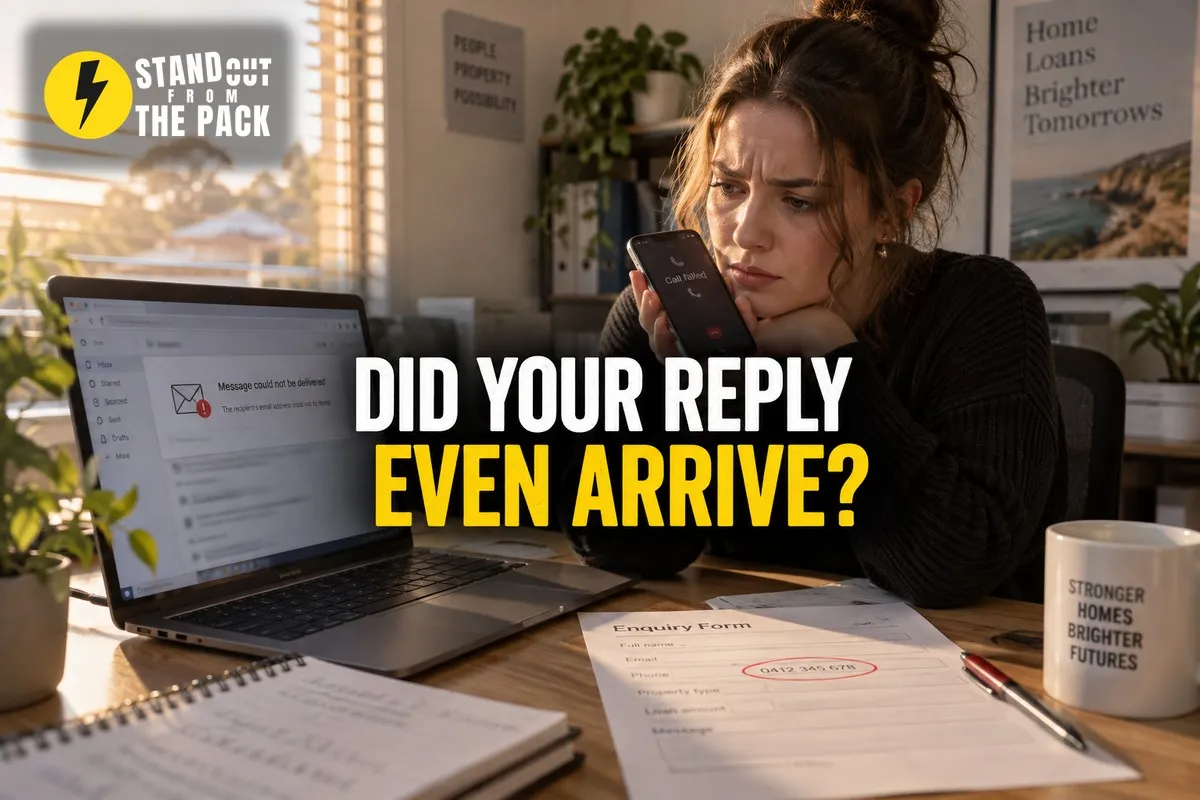
Picture a small mortgage broking office. Two brokers, one admin, maybe forty new enquiries a month from the website and a couple of comparison sites. On a Tuesday night, a nurse finishing a late shift fills in the "talk to a broker" form on her phone. She is buying her first place, she has a pre-approval question, and she types her email with one letter missing. Gmial instead of gmail. It happens to all of us with tired thumbs.
Wednesday morning, the admin sends a lovely welcome email with a booking link. It bounces, quietly, into a folder nobody looks at. She calls the mobile number. It rings out, because the nurse is asleep after a night shift. A text goes out on Thursday. Friday, another email. By the following week the lead has a little note on it: "No response, tried 4x". And eventually it gets moved to "Lost".
Meanwhile the nurse is wondering why a business that says "we reply within one business day" never replied. So she books with the broker her colleague recommended.
Both sides think the other one dropped the ball. Nobody did, exactly. The message just never reached her.
And here is the thing. That lead was never cold. It was unreachable. Those are two very different problems, and most follow-up processes treat them as the same one.
Why do good leads get marked as "unresponsive"?
Because most businesses measure what they sent, not what arrived.
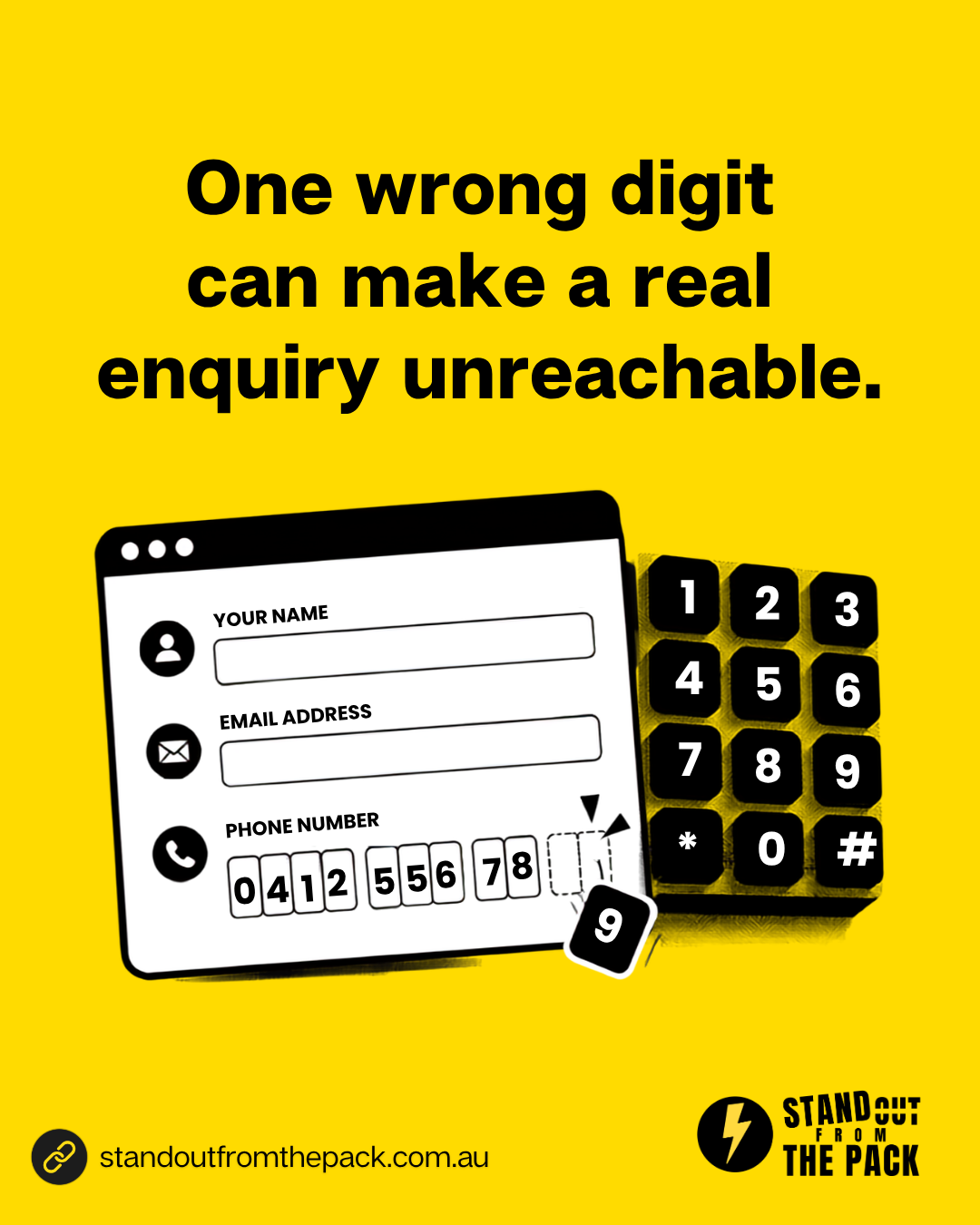
The form accepts anything. A missing digit, a swapped letter, a space in the middle of an email address. If the form does not check, the mistake goes straight into your CRM looking exactly like a real contact.
Failures are quiet. A bounced email does not ring a bell. A text to a disconnected number does not flash red on the dashboard. Unless someone goes looking, a failed message looks identical to an ignored one.
The follow-up sequence keeps going anyway. Your process says "email on day one, call on day two, text on day four". It runs perfectly, every step ticked, all of it into a void. The activity log looks busy, which makes it even harder to spot.
"No response" is a convenient label. When a lead goes silent, it is natural to assume they lost interest. It is much rarer for anyone to ask, "Did they actually receive anything?" So the label sticks, and the lead goes in the bin with the tyre kickers.
And this is why the problem hides so well. Every one of these leads looks like a follow-up success that just did not convert. In reality, they are an enquiry problem dressed up as a sales problem.
How do you make sure your follow-up actually reaches people?
Two halves: catch the mistakes before the enquiry is submitted, then notice the failures after. Six steps.
1. Let the form catch the obvious errors. Check that an email address looks like an email address and a mobile number has the right number of digits for Australia. Most forms can do this with a simple rule. It will not catch everything, but it catches the missing digit and the stray space, which are the most common slips.
2. Show people what they typed before they submit. A short line like "We will reply to [email protected] and 0412 345 678. Is that right?" gives the customer one last look. It feels small. It is surprisingly effective, because people notice their own typo the moment they see it read back to them.
3. Send an instant confirmation on more than one channel. The moment the enquiry lands, send a short confirmation by email and by text. If one channel fails, the other usually gets through, and the customer now knows to expect you. If neither arrives, that tells you something too, which brings us to the next step.
4. Treat delivery failures as a signal, not noise. Bounced emails, failed texts, numbers that are not connected. These should not sit quietly in a log. When a message fails, flag the contact (a tag or a "check details" stage works well) and create a task for someone to look at it the same day.
5. Try another channel, then check the original details. If the email bounced but you have a mobile, text them: "Hi, we tried to email you back about your enquiry and it did not go through. What is the best email to use?" If the number failed, try the email. And have a quick look at the original enquiry. "gmial.com" is fixable in ten seconds once a human actually sees it.
6. Only mark a lead "unresponsive" if they were reachable. Make this a rule. A lead can only move to "no response" once at least one message was confirmed delivered. If nothing got through, they belong in "unreachable", which is a different list with a different action.
The thread through all six: a follow-up only counts if it arrives. Everything else is just activity.
What usually goes wrong?
Making the form so strict that real people cannot submit it. Over-zealous rules reject perfectly valid email addresses or international numbers. Keep checks simple and helpful, and make the error message say exactly what to fix.
Adding a "confirm your email" field. It sounds sensible. In practice, people copy and paste the first field into the second, typo included. Reading the details back to them before they submit works much better.
Nobody owns the failures. The system flags the bounce, the tag gets added, and then it sits there because the task went to "the team". Give unreachable leads a named owner, just like new leads.
Chasing the same broken channel. Four emails to an address that bounced the first time is not persistence. It is the same mistake four times. Once a channel fails, stop using it until the details are fixed.
Never looking at the numbers. If one in fifteen enquiries from a particular form fails delivery, that form has a problem. Check your unreachable list once a month and look for patterns: a specific form, a specific source, a specific field.
Why is this better than the alternatives?
"If they really want us, they will call back." Some will. Most will assume you are not interested and go elsewhere, because from where they sit, you never replied. The keenest enquiries often go quickest, because they have the most options.
"We will just follow up more." More follow-up into a broken channel does not help. It just makes your activity report look impressive while the lead books with someone else.
"Our admin will spot the typos." Maybe, on a quiet week. On a busy one, a misspelt email looks perfectly normal at a glance. A simple check at the form and a flag on failed delivery do not get tired at 4pm on a Friday.
The payoff: genuine enquiries stop disappearing into the "lost" column, your follow-up numbers become honest, and you stop losing customers who were ready to go. A few weeks ago we wrote about what your thank-you page should say after someone enquires. This is the step underneath it: making sure the conversation you promise can actually happen.
How does this work inside Stand Out From The Pack?
Most of the above can be built from forms with field validation, an instant confirmation by email and text, conversations that show when a message failed to deliver, tags and pipeline stages for unreachable leads, and tasks that land with a named person. Every customer on every plan has those tools from day one. The only question is who sets them up.
- Do it yourself, with support. Every plan includes onboarding for the owner and the team, a knowledge base with 50 plus interactive guides, 24/7 live chat with real people and weekly Open Office Hours (all on our support page). Bring your enquiry form to Office Hours and we will help you tighten it up, live.
- Get the foundations done for you. Our done-for-you account setup connects your phone number, email and inbox properly, so confirmations actually reach people and replies land in one place.
- Have us build it. Lead capture and follow-up systems are part of our Profit Roadmap. A single job like "add an unreachable stage and a failed delivery task" sits on our services menu, and a larger rebuild across several forms and sources becomes a custom project.
If your form is also asking for too much information up front, our piece on enquiry forms that ask less and convert more pairs nicely with this one.
What just happened behind the scenes of this article?
Here is a nice twist on today's topic.
Today's social post asked you to comment LEADS. When you did, an automation picked up the comment and, within a minute, Alfie (Vit's AI sidekick) sent you a direct message with this article. Notice what we did not ask for: your email address or your phone number.
Because you commented on the platform you were already using, the reply went straight back to you on that same platform. No form, nothing to type, nothing to mistype. The contact details were correct by design, because you supplied them just by being there.
That is the spirit of this article in miniature: make it as hard as possible for a genuine enquiry to get lost between "I am interested" and "here you go". It runs in our own account on the same platform our customers use, built the way any of them could build it, or have us build it for them.
A quick check for your own business
- Does your enquiry form check email and phone formats before someone can submit it?
- Do new enquiries get an instant confirmation on more than one channel?
- Would anyone on your team know today if a welcome email had bounced?
- Is there a named person who follows up leads with failed contact details?
- When a lead is marked "no response", do you know for sure that a message reached them?
Frequently asked questions
How common are wrong contact details on enquiry forms? It varies a lot by form and audience, and mobile forms tend to see more slips. The only number that matters is yours, so check how many of last month's enquiries had a bounced email or failed text.
Should we call or email first when an email bounces? Use whatever other channel you have, usually a text if there is a mobile number. Keep it short, explain the email did not go through and ask for the best address.
What if both the email and phone number are wrong? Check the original enquiry for an obvious typo first. If nothing can be fixed, keep the record in your unreachable list so you recognise them if they get in touch again.
Will form validation put people off? Not if it is simple and the error messages are clear. Checking that a mobile number has ten digits is helpful. Rejecting valid addresses is not, so test your form with a few real examples.
Want to see where your enquiries might be slipping through? Comment LEADS on the post on Facebook or Instagram and we will take it from there.




Live, Practical, Zero Jargon
Short sessions on follow-up, systems and AI you can put to work the same afternoon. Get on the list and we'll tell you when the next one's on.
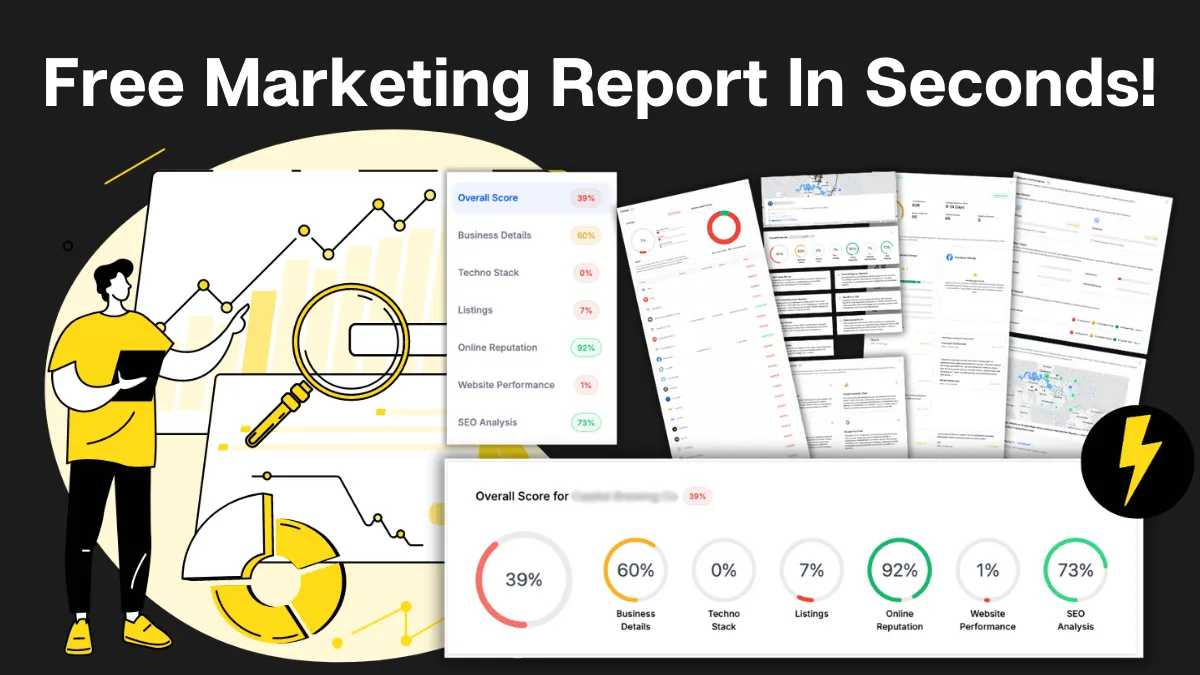
How Do You Stack Up Against the Business Down the Road?
See how you show up online next to competitors near you: reviews, listings, visibility. Free, and no homework required.

Supercharge Your Business!
Transform your business growth with our all-in-one sales and marketing software. Capture, nurture, and close more leads with ease. Don't miss out on the opportunity to streamline your operations and drive success.

See It Working Before You Talk to Anyone
Watch an enquiry get caught, answered and booked in without you glued to your phone. Your pace, no pressure.

Never miss an update from Business Booster Insights. Subscribe to our 'Level Up Newsletter' and get expert tips, strategies, and exclusive content delivered straight to your inbox. Elevate your business game today!

Your Clients Need Better Follow-Up. You Could Earn From It.
Accountants, coaches and consultants spot leaky businesses every day. Recommend the fix and earn ongoing commission.

Where Are Your Enquiries Going Cold?
Answer a few quick questions and see exactly where leads slip between "just asking" and "let's book." Takes less time than your next coffee order.
Still Handing Out Cards That End Up in the Wash?
Share your details in one tap so people can save you, call you or book you on the spot. Yours free.