


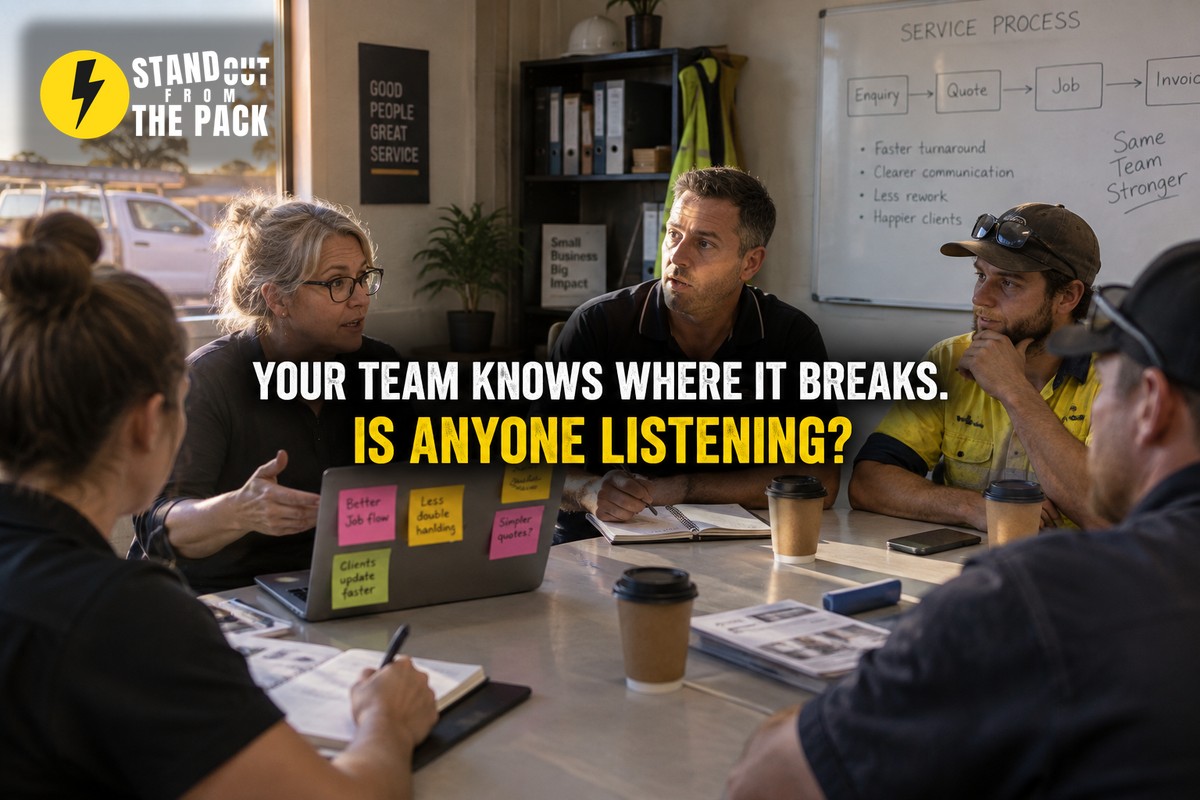
Your Team Already Knows Where the Process Breaks. Is Anyone Listening?
I keep noticing the same thing when I sit in on a team meeting at a client's business for the first time.
Somebody, usually the person who has been answering the phones the longest, will say something like "oh yeah, the online form. Half of them come through without a phone number, so I just ring the email address.. I mean, I email them and ask for a number." And everyone nods. Because everyone knows. It has been happening for a year and a half.
Then someone else mentions that customers keep asking whether parking is included, and she has a little text she copies and pastes. And the bloke who does the quotes says the handover from sales to install "sort of works if I remember to message Dave".
Three broken bits of process, all known, all worked around, none of them written down anywhere, and none of them fixed. The owner, sitting next to me, is hearing at least one of them for the first time.
This is not a lazy team. Honestly, it is the opposite. It is a team so good at coping that the problems never become visible enough to solve. And that, right there, is the difference between a system that sticks and a system that slowly turns into a collection of workarounds held together by the memory of whoever has been there longest.
Why do process problems stay hidden?
Because they live inside individual conversations.
The workaround is faster than the report. When the form arrives with no phone number, the quickest fix is to email and ask. Telling someone "the form is broken" takes longer and feels like complaining. So the workaround wins, every single time, and the pattern never gets counted.
Nobody owns "the process". Everyone owns their bit. The form belongs to whoever built the website. The handover belongs to.. well, nobody, which is why it depends on Dave getting a message.
The friction is small each time. Forty seconds here, one extra email there. It never hurts enough on any given day to justify stopping and fixing it. Multiply it by a year and a team of five and it is weeks of work, but nobody ever sees that number.
Fixes go out as memos. When something does get fixed, it is fixed in a message. "Hey team, from now on please always ask for the phone number." Which works for the people who read it, until the new person starts.
And this is why "just tell me if something is not working" does not work. The information is there. It is just trapped in people's heads and copy-paste snippets.
How do you build a system that surfaces its own friction?
The goal is not to run a monthly process review that everyone dreads. The goal is to make the system itself show you the pattern, so fixing it once becomes the obvious move. Five pieces.
1. Stop the broken input at the door. If the form keeps arriving incomplete, the fix is not a better email asking for the missing bit. It is a required field. One change, made once, and the problem is gone for every future enquiry. The same goes for bookings without a service selected and jobs without an address.
2. Tag the repeat questions. Every time a customer asks about parking, or cancellations, or "what do I need to bring", the team adds a tag to the conversation. Takes one click. After a month you have a list of the ten questions that generate the most work, and you know exactly what belongs on the website, the confirmation message and the welcome text.
3. Let the handover create the task. When a deal moves to "won", the system creates the install task, assigns it to Dave, and sets the date. Dave gets it whether or not anyone remembers to message him. This one is almost embarrassing in how much stress it removes.
4. Show where things stall. A simple view of your pipeline that shows how many records have sat in each stage for more than X days. Not a fancy dashboard, just the numbers. If "awaiting quote" has fourteen jobs older than a week, you have found your bottleneck without a single meeting.
5. Give every observation an owner, a priority and a review date. For the friction the system cannot catch on its own, a two minute habit: when someone spots a pattern, it gets logged as a task with a name against it and a date to look at it. Not a Slack message. A task. Because tasks come back, and messages scroll away.
The thread running through all five is the same. The improvement is made in the system, not in a memo, so every customer gets the better version from the moment it goes live, and the new person inherits it automatically.
What usually goes wrong?
The fix is a reminder to humans. "Please remember to..." is not a fix. It is a hope. If a step matters, build it into the workflow so it happens without remembering.
Everything gets redesigned at once. One frustrating week, the owner decides to rebuild the whole process. Six weeks later nothing has shipped and the team is still copy-pasting the parking answer. Fix one thing, this week, in the system. Then the next.
Tags with no follow-through. The team dutifully tags conversations for two months and nothing changes, so they stop. Tagging only sticks if someone actually looks at the count and acts on it. Put a monthly fifteen minute review on the calendar.
The dashboard has forty numbers. You need three or four. Stalled records by stage, incomplete enquiries, top repeat questions. If it takes longer than a minute to read, it will not get read.
Nobody tells the team what changed. The form got fixed, but the person who used to email for phone numbers is still doing it out of habit. Close the loop: "you flagged this, here is what we changed, you can stop doing the workaround." That sentence is what makes people flag the next thing.
Why is this better than the alternatives?
"We have a process document." Lovely. When did anyone last read it? Documents describe the process. The system enforces it, and only one of those survives a busy Friday.
"We talk about it in the team meeting." You should. But the meeting captures whatever is top of mind that morning, not what happened 200 times over the quarter. The tags and the stalled-record count remember what people forget.
"I will just fix things as I hear about them." You will hear about a fraction of them, usually the loud ones, and the quiet forty-second workarounds will never reach you.
A system that surfaces its own friction turns your team's daily coping into a steady stream of small, permanent improvements. And a process that keeps getting a little better is the only kind that actually sticks.
How does this work inside Stand Out From The Pack?
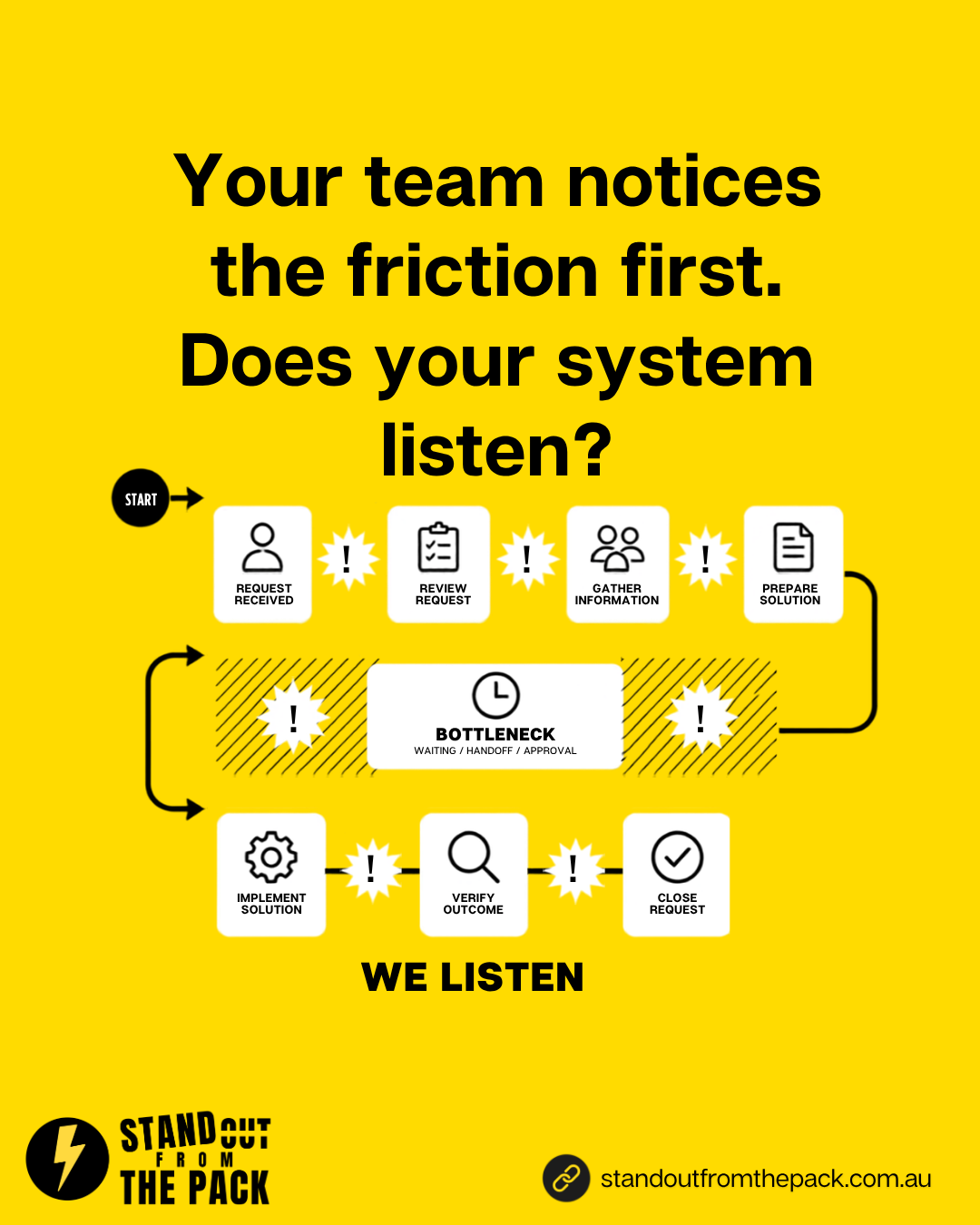
Nothing here needs extra software. Required fields on a form, tags on conversations, a pipeline with stage timers, tasks that trigger off a stage change and a couple of saved views. Every customer on every plan has all of that from day one. What varies is who sets it up.
- Do it yourself, with support. Every plan comes with onboarding for the owner and the team, a knowledge base with 50 plus interactive guides, 24/7 live chat with real people and weekly Open Office Hours (the full list is on our support page). Bring the three workarounds your team mentioned last week and we will turn them into system fixes together, live.
- Get the foundations done for you. Our done-for-you account setup puts the forms, pipeline stages and team access in place properly, which is the platform everything above is built on.
- Have us build it. Stage-triggered tasks, stalled record views and the follow-up sequences that remove the repeat questions are built into the systems in our Profit Roadmap. Smaller jobs, like "make this form stop arriving incomplete", sit on our services menu, and anything bespoke becomes a custom project.
Whichever route, the system does the noticing, and your team gets to do the fixing instead of the coping.
This piece is a natural follow-on from what happens to your process on a bad day. That one is about designing for exceptions. This one is about hearing from the people who meet the exceptions first.
What just happened behind the scenes of this article?
A short aside, because we should be the proof of what we preach.
Today's social post asked you to comment SYSTEM. When you do, an automation picks up your comment, sends you a direct message within a minute with a short guide on this exact topic, and opens a conversation in our inbox with your name on it. Every one of those conversations carries a tag for the topic you commented on. Which means, a month from now, we can see exactly which themes people care most about, and that decides what we write and build next. Our readers are our feedback loop, and the system is counting so we do not have to.
It runs in our own account on the same platform our customers use, built the way any of them could build it, or have us build it for them.
A quick check for your own business
- Name one workaround your team does every week that nobody has ever fixed.
- Which customer question does your team answer most often, and where is the answer already written down?
- When a deal is won, who finds out, and how?
- Can you see, right now, how many records have sat in one stage for more than a week?
- When someone flags a broken step, where does it go, and when does it come back?
Frequently asked questions
How often should we review the friction the system surfaces? Fifteen minutes a month is plenty to start. Look at the stalled counts and the top tags, pick one fix, ship it in the system that week.
Will my team actually tag conversations? They will if it is one click and they see something change because of it. The first time you say "you flagged this, we fixed it", tagging becomes a habit.
What if the fix needs a whole new workflow? Then it goes on the list with an owner and a date, like anything else. Most friction, though, is a required field, a saved reply or a triggered task. Start there.
Is this only for bigger teams? No. A team of two has workarounds too, they are just harder to see because both people know them. The stalled-record view is often the first time a small business owner sees their own bottleneck in numbers.
Want your system to start doing the noticing? Comment SYSTEM on the post on Facebook or Instagram and we will show you how to build it.




Live, Practical, Zero Jargon
Short sessions on follow-up, systems and AI you can put to work the same afternoon. Get on the list and we'll tell you when the next one's on.
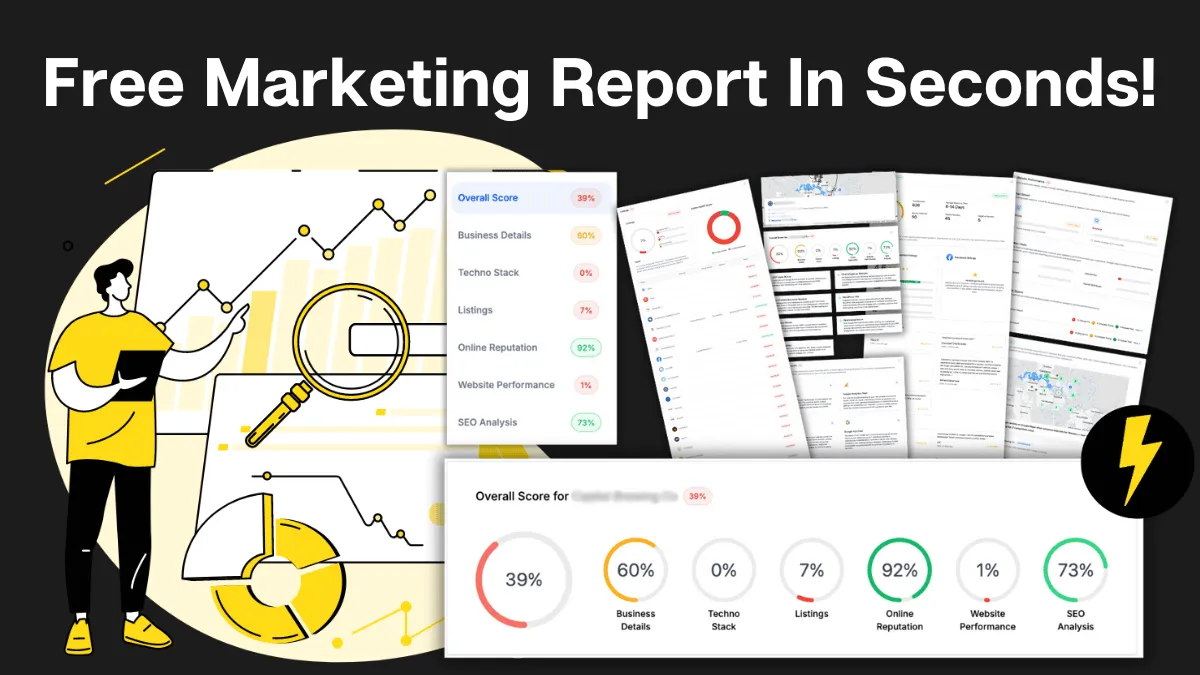
How Do You Stack Up Against the Business Down the Road?
See how you show up online next to competitors near you: reviews, listings, visibility. Free, and no homework required.

Supercharge Your Business!
Transform your business growth with our all-in-one sales and marketing software. Capture, nurture, and close more leads with ease. Don't miss out on the opportunity to streamline your operations and drive success.

See It Working Before You Talk to Anyone
Watch an enquiry get caught, answered and booked in without you glued to your phone. Your pace, no pressure.

Never miss an update from Business Booster Insights. Subscribe to our 'Level Up Newsletter' and get expert tips, strategies, and exclusive content delivered straight to your inbox. Elevate your business game today!

Your Clients Need Better Follow-Up. You Could Earn From It.
Accountants, coaches and consultants spot leaky businesses every day. Recommend the fix and earn ongoing commission.

Where Are Your Enquiries Going Cold?
Answer a few quick questions and see exactly where leads slip between "just asking" and "let's book." Takes less time than your next coffee order.
Still Handing Out Cards That End Up in the Wash?
Share your details in one tap so people can save you, call you or book you on the spot. Yours free.