


Your Process Works on a Good Day. What Happens on a Bad One?
Every process document I have ever been shown is written for the perfect customer.
Enquiry comes in. Gets replied to. Customer books, turns up, pays, leaves a glowing review. Lovely. There is usually a flowchart, and everyone nods at the flowchart.
Then real life shows up, as it does. The enquiry form arrives with no phone number. The customer replies once and then vanishes for a week. The booking gets cancelled at 9pm the night before. Someone on the team forgets to hand over the file. And at that exact moment the flowchart is about as useful as a chocolate teapot, because it never said what to do when things go sideways.
So the team improvises. The owner gets pulled in. And the beautiful "system" turns back into a group of people trying to remember things.
Here is the one idea I want you to take from this article, because it changed how I think about every business I work with: the strength of a process is not how it handles the ideal path. It is how it carries your team through the exceptions without anyone having to remember. And a proper system does not just describe what happens when things go wrong. It actually does it.
Why do processes fall apart on the exceptions?
Because exceptions are where the thinking happens. And thinking is the first thing people skip when they are busy.
Picture your admin person on a quiet Tuesday. They spot the form with the missing phone number, they ring the customer, sorted. Now picture the same person on a flat out Friday, phone ringing, two jobs running late, someone at the counter. That incomplete form sits in the inbox until Monday. Same person, same process document, completely different outcome.
The process did not fail. It was never built to work without spare attention. And spare attention is the one thing a growing business never has.
And here is the bit that surprises people: exceptions are not rare. In most service businesses I look at, somewhere between a third and a half of enquiries hit at least one bump. Missing information, no reply, a reschedule, a question nobody has the answer to. So if your system only covers the clean path, it is only covering half your customers. The other half are getting whatever the busiest person on the team can manage that day.
How do you build a system that handles the bad days?
Start with the four questions your team is already answering by guesswork, and give each one a built in answer.
1. What happens when a customer stops responding? A follow-up sequence starts on its own. Two days of silence triggers a friendly nudge. A week triggers a different message with a different angle, maybe a common question answered, maybe a booking link. After that, a task lands with a named person to make a personal call, with the full conversation attached so they are not walking in blind.
2. Who chases missing information? The system does, first. Form arrives without a phone number or a job address? The customer gets an automatic message asking for the missing detail, and the record gets flagged for review. Your team only gets involved if the customer does not respond. Which, most of the time, they do.
3. When does something get escalated to a person? When the rules you set say so. No reply after the full sequence. A customer who mentions "urgent" or "complaint". A quote over a certain value that has been open for more than ten days. Define those triggers once, and let the system alert the right person, rather than hoping someone happens to spot it.
4. When is it better to stop? This one gets missed all the time. Not every enquiry converts, and chasing forever wastes your team's time and annoys the customer. So the system closes the loop after a set number of attempts, records why, and moves the contact into a long term nurture list. Nobody keeps chasing, and nothing gets lost either.
5. Make the routine steps run on their own. The enquiry gets assigned automatically. The reminder goes out on time. The handover task appears in the right person's list without anyone asking. Because your people should not be the trigger for routine work. They should be the ones looking after the customer in front of them.
6. Give the team one place to see the exceptions. A view in your CRM that shows everything currently stuck: waiting on customer, missing information, escalated, overdue. When the team can see the exceptions in one list, they stop living in fear of the one they forgot. And honestly, that fear is more exhausting than the work.
What usually goes wrong?
The process lives in a document nobody opens. A Google Doc or a laminated SOP describes the steps, but nothing enforces them. Fix: build the steps into the system the team already works in, so the process is the workflow, not a reference to it.
Every exception goes to the owner. When the process does not cover something, the default is "ask the boss". That is a bottleneck dressed up as a safety net. Fix: escalation rules that route to named people, with the owner as the last resort, not the first.
Automation with no stop rule. The customer has already booked and is still getting "just following up" messages. We have all received one of these. Fix: every sequence has exit conditions, and a reply or a booking ends it instantly.
No one owns the exception list. The stuck view exists, but nobody is responsible for clearing it. Fix: one person, five minutes, every morning. It becomes a habit surprisingly fast.
Rebuilding everything at once. Trying to systemise every exception in one go is how projects stall. Fix: start with the single most common one, which is nearly always "customer went quiet", and add the next once it is working.
Why is this better than the alternatives?
"Our team are experienced, they know what to do." They do, on a good day. Experience does not create spare attention on a bad one, and it walks out the door when someone leaves.
"We have a detailed SOP." A document describes the work. It does not do any of it. Your team still has to notice the exception, remember the rule and find the time.
"We will hire another admin person." Sometimes you should. But a person handling exceptions manually is still relying on memory and attention, just with a higher salary attached. Put the routine exceptions on the system first, and you often find you do not need the hire, or the hire can do far more valuable work.
The system does not eliminate every problem. It gives your team a clear next step for the common ones and takes the routine ones off their plate completely.
How does this work inside Stand Out From The Pack?
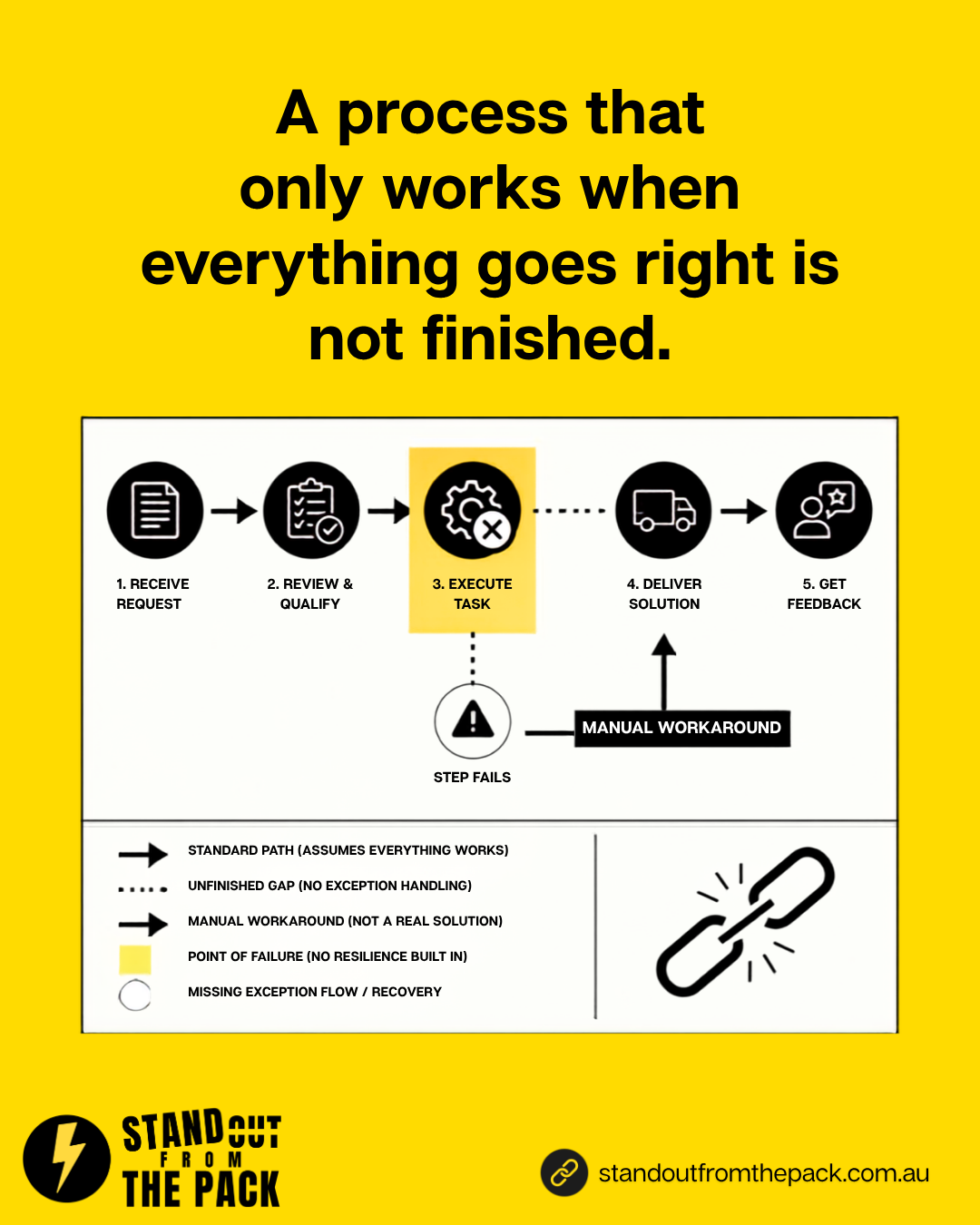
The building blocks for all of this are standard in every customer account: workflows with wait steps and conditions, form logic, internal notifications and tasks, pipelines with custom stages, smart lists, and long term nurture campaigns. The hard part is not the features. It is deciding your exception rules and getting them built and adopted by the team.
That is where our customers have options:
- Build it yourself, with a partner in your corner. Every plan includes onboarding for the owner and the team, a knowledge base with 50 plus interactive guides, 24/7 live chat support, weekly Open Office Hours and a community of other business owners doing the same work. "My customers keep going quiet, how do I automate that?" is one of the most common Office Hours questions, and a good one.
- Get the foundations done for you. Our done-for-you account setup configures phone, email, calendars, chat and integrations properly, so the automations have clean data to work with.
- Have us build the systems. The Profit Roadmap is our productised set of ten systems, installed one at a time over the first few months so the team can absorb each one. Exception handling, the stop rules, the escalation tasks and the "needs attention" view are baked into each system as it goes in. Anything more bespoke becomes a custom project, and the smaller one-off jobs live on our services menu.
Either way, we start with the most common exception and add the next one once it is working. Because the ones you have not thought of yet will show up soon enough. They always do.
What just happened behind the scenes of this article?
A quick aside, because we should be the proof of what we preach.
Today's social post asked you to comment SYSTEM. When you do, an automation picks up your comment, sends you a direct message within a minute with a short guide on this exact topic, and opens a conversation in our inbox with your name on it. If you reply, one of us picks it up with the full history in front of us. If you go quiet, you get one gentle follow-up a couple of days later, and then it stops. That is the stop rule from point four, running on our own funnel.
Nobody on our team is refreshing the comments. Nobody is copying names into a spreadsheet. It runs the same on a quiet Tuesday and a flat out Friday, which is the whole point of this article. And it is built in our own account on the same platform our customers use, the way any of them could build it, or have us build it for them.
A quick check for your own business
- If a customer goes quiet today, what happens tomorrow without anyone remembering?
- When a form arrives with missing information, who asks for it and how quickly?
- Can your team see every stuck enquiry in one place right now?
- How many exceptions ended up on the owner's desk this week?
- Does anything in your business automatically stop chasing once the customer has booked?
Frequently asked questions
Where should I start if we have no systems at all? Start with "customer went quiet". It is the most common exception, the easiest to automate and the one with the most revenue attached.
Won't automated follow-up feel impersonal? Not if the messages sound like you and stop the moment the customer replies. What actually feels impersonal is being forgotten.
How many follow-up attempts is too many? For most service businesses, four to six touches over two to three weeks, across at least two channels, then close the loop and move to long term nurture.
Do I need to document the process first? Rough is fine. Write down the four exception questions above with your answers, then build them. The system becomes the documentation.
If you want to see how this would look for your business, comment SYSTEM on the post on Facebook or Instagram and we will show you how to build one.




Live, Practical, Zero Jargon
Short sessions on follow-up, systems and AI you can put to work the same afternoon. Get on the list and we'll tell you when the next one's on.
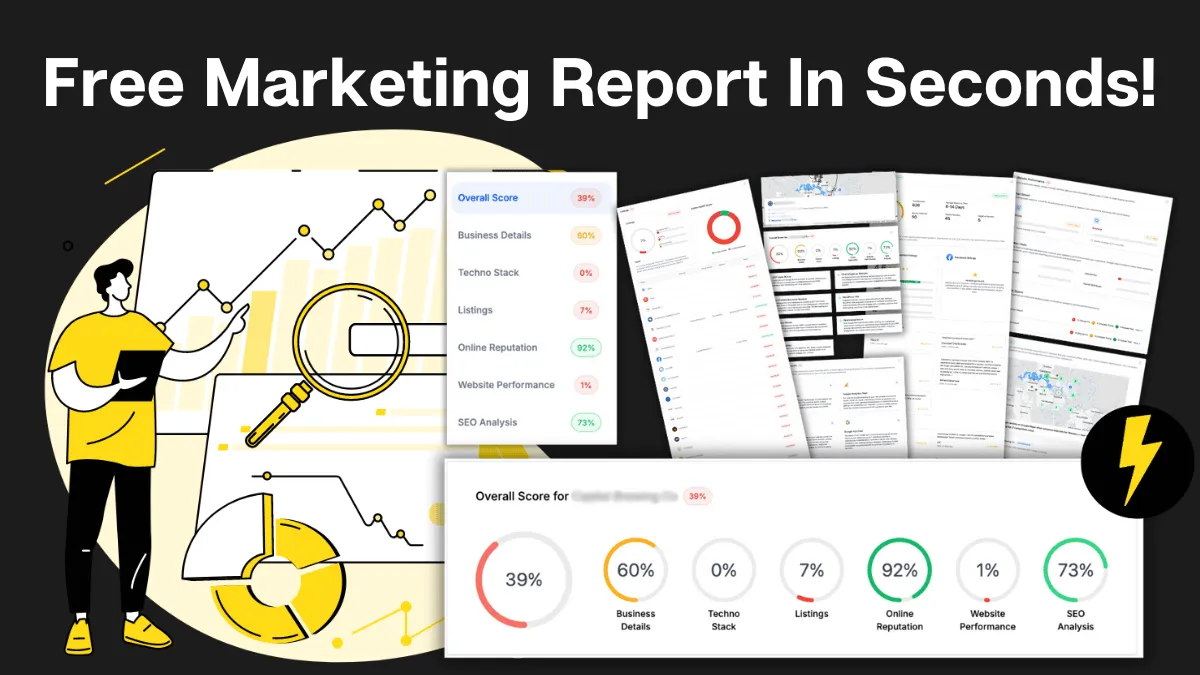
How Do You Stack Up Against the Business Down the Road?
See how you show up online next to competitors near you: reviews, listings, visibility. Free, and no homework required.

Supercharge Your Business!
Transform your business growth with our all-in-one sales and marketing software. Capture, nurture, and close more leads with ease. Don't miss out on the opportunity to streamline your operations and drive success.

See It Working Before You Talk to Anyone
Watch an enquiry get caught, answered and booked in without you glued to your phone. Your pace, no pressure.

Never miss an update from Business Booster Insights. Subscribe to our 'Level Up Newsletter' and get expert tips, strategies, and exclusive content delivered straight to your inbox. Elevate your business game today!

Your Clients Need Better Follow-Up. You Could Earn From It.
Accountants, coaches and consultants spot leaky businesses every day. Recommend the fix and earn ongoing commission.

Where Are Your Enquiries Going Cold?
Answer a few quick questions and see exactly where leads slip between "just asking" and "let's book." Takes less time than your next coffee order.
Still Handing Out Cards That End Up in the Wash?
Share your details in one tap so people can save you, call you or book you on the spot. Yours free.